
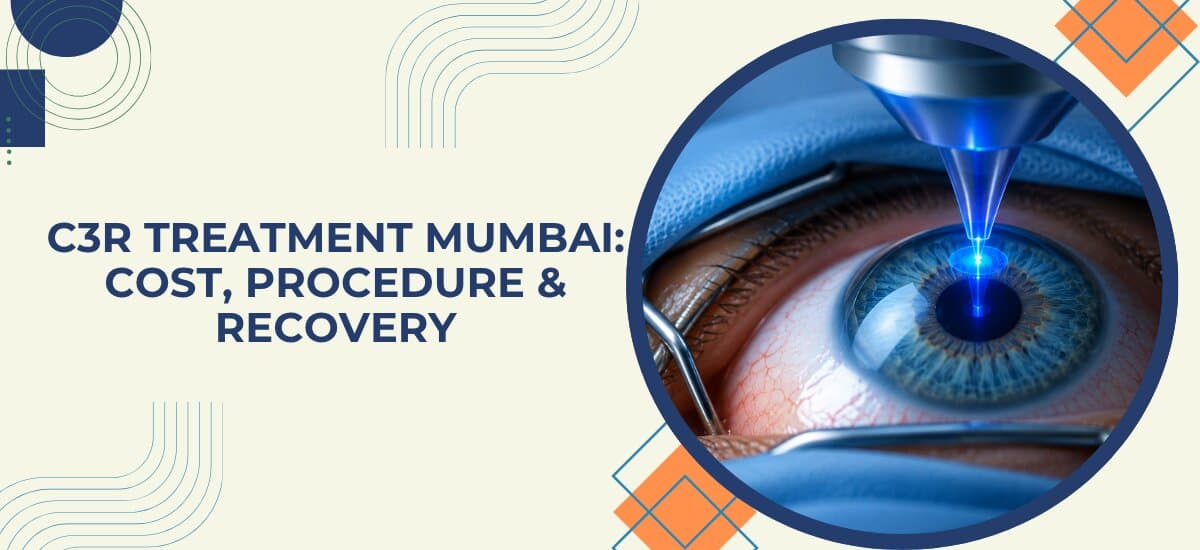
Keratoconus doesn't reverse on its own. The cornea thins, the cone steepens, and without intervention, the options eventually narrow to surgery. C3R, or corneal collagen cross-linking, is the procedure that interrupts that process. It doesn't fix the shape of the cornea. What it does is stop the deterioration, and for most patients caught at the right stage, that's enough to preserve useful vision for years without needing a transplant.
It's a relatively short procedure, done as an outpatient, and recovery is straightforward for most people. The harder part is knowing whether you need it and when to act.
Dr. Vaishal Kenia, Chairman and Medical Director at Eye Hospital in Mumbai, says: "C3R works best when we catch the progression early. Once we confirm the cornea is changing on topography, we don't wait. The younger the patient, the faster keratoconus tends to move, and timing the treatment correctly is what makes the real difference to the outcome."
What Is C3R and How Does the Procedure Work?
C3R stands for corneal collagen cross-linking with riboflavin. The basic idea is simple enough. The cornea gets its strength from collagen fibres running through it. In keratoconus those fibres weaken and the cornea starts to lose its shape. C3R creates new bonds between those fibres, stiffening the cornea and stopping further thinning.
The procedure itself isn't complicated. Here's how it goes:
Pre-treatment Assessment: Before anything is scheduled, a Pentacam HR and Corvis ST are done to map the cornea's shape, thickness, and biomechanical strength. This confirms whether the keratoconus is actively progressing and whether the cornea is thick enough for the procedure to be done safely.
Riboflavin Drops: On the day, the surface layer of the cornea is either gently removed or kept intact depending on which C3R protocol is used. Riboflavin drops, a form of Vitamin B2, are then applied repeatedly over about 30 minutes. These saturate the corneal tissue and act as a photosensitiser for the next step.
UV Light Exposure: The eye is then exposed to a controlled dose of ultraviolet light for around 30 minutes. The UV activates the riboflavin, triggering a chemical reaction that creates new cross-links between the collagen fibres. More cross-links mean a stronger, stiffer cornea that resists further bulging.
What to Expect During: Eye drops keep the eye numb throughout. There's no significant pain during the procedure. Some patients feel a mild ache or foreign body sensation in the hours after, particularly if the epithelium was removed. That usually settles within a few days.
For a full overview of keratoconus management and treatment options, the keratoconus treatment page covers everything in detail.
C3R Cost, Recovery and Results in Mumbai
C3R is an outpatient procedure and recovery is manageable for most people. Here's what to expect across cost, healing, and long-term results:
What C3R Costs in Mumbai: Typically ranges from Rs 25,000 to Rs 45,000 per eye, depending on the protocol used and whether topo-guided PRK is combined at the same sitting. Accelerated protocols that reduce chair time are available at some centres and may affect pricing. Always get a written estimate after a proper workup.
First Week of Recovery: If the epithelium was removed, the surface takes about a week to heal. Vision stays blurry during this period, sometimes worse than before the procedure. That's normal and expected. A bandage contact lens is placed over the eye for the first few days to protect the surface and reduce discomfort.
Vision Stabilisation: After the first week, vision gradually settles over the following months. C3R doesn't reshape the cornea, so the prescription doesn't necessarily improve. What changes is that it stops getting worse. Most patients still need glasses or scleral lenses for best-corrected vision, but the deterioration halts.
Long-term Results: Studies consistently show C3R halts progression in the majority of treated eyes, particularly in younger patients where keratoconus moves fastest. Follow-up topography at three, six, and twelve months confirms stability. The effect appears durable over many years in eyes where progression has genuinely stopped.
For patients dealing with related corneal conditions, the cornea treatment page covers diagnosis and surgical options including transplants and advanced corneal care.
Why Choose Kenia Eye Hospital
Kenia Eye Hospital has been at Santacruz (West), Mumbai since 1998. Keratoconus diagnosis and management, including C3R, has been part of the practice for over two decades. Dr. Vaishal Kenia handles corneal and refractive cases with a focus on early detection and choosing the right intervention at the right time.
Pre-surgical workup runs through Pentacam HR and Corvis ST for detailed corneal mapping. NABH, QAI, and FEQH accredited. CGHS empanelled. If you've been told your keratoconus is progressing or your prescription keeps shifting, a corneal topography is the place to start. Call +91 75064 99962 to book.
