Glaucoma treatment in Mumbai at Kenia Eye Hospital combines advanced diagnostics, medical management, SLT laser, non-penetrating glaucoma surgery, and MIGS to protect long-term vision. Led by Dr. Vaishal Kenia, our glaucoma specialists have managed thousands of glaucoma patients across Mumbai since 1998, using precision diagnostics like OCT, Visual Field Analysis, and Pentacam HR to slow disease progression and preserve remaining vision. Whether you have recently been diagnosed with high eye pressure or need advanced glaucoma surgery, our specialists provide personalised, lifelong care.

At Kenia Eye Hospital, glaucoma care is approached as a lifelong journey, not a one-time procedure. Every patient undergoes a detailed evaluation using advanced glaucoma diagnostic technology, including OCT (RNFL analysis), Visual Field Analysis, Pentacam HR corneal mapping, and Anterion imaging, ensuring accurate diagnosis, precise staging, and personalised treatment planning.
Our glaucoma clinic in Mumbai offers the full care spectrum: prescription eye drops, SLT (Selective Laser Trabeculoplasty), non-penetrating glaucoma surgery, MIGS (Minimally Invasive Glaucoma Surgery), and filtration procedures like trabeculectomy. Dr. Vaishal Kenia has pioneered non-penetrating glaucoma surgery techniques in India as a safer, less invasive alternative to conventional filtration procedures, helping patients achieve better long-term intraocular pressure (IOP) control with fewer complications.
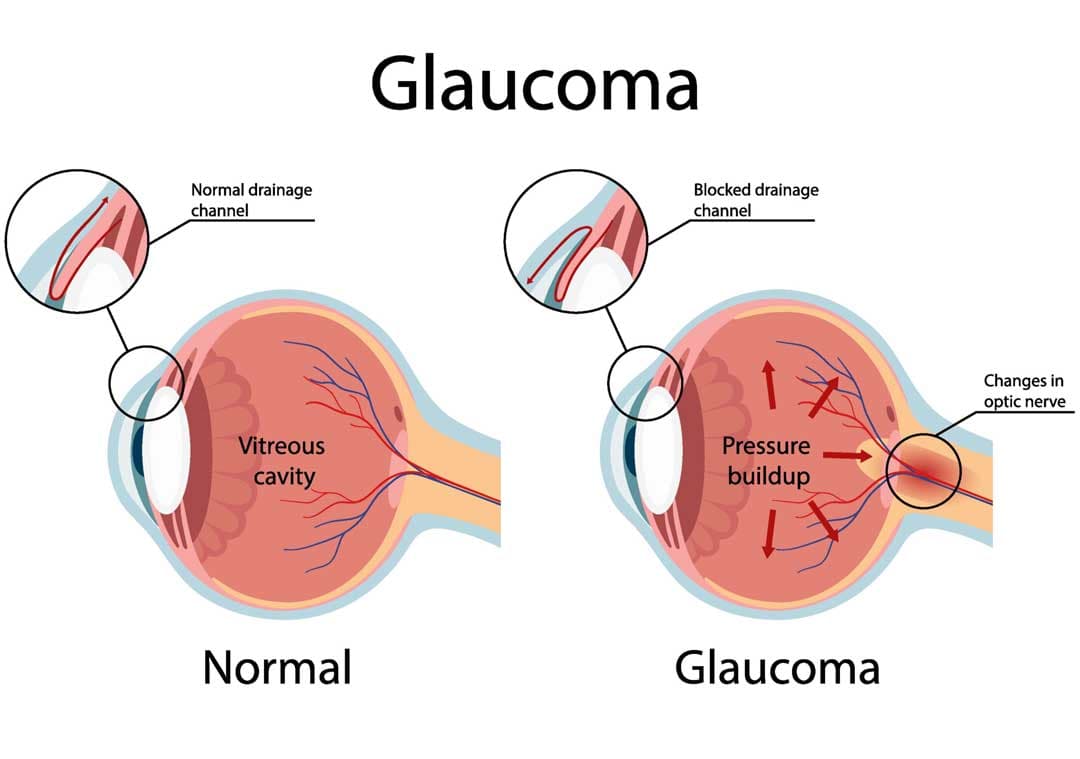
Glaucoma is a group of eye diseases that damage the optic nerve, most often due to raised eye pressure (intraocular pressure or IOP). Left untreated, glaucoma can lead to permanent vision loss and blindness.
The optic nerve carries visual information from the eye to the brain. When it is damaged by high eye pressure or other factors, peripheral (side) vision is affected first, followed by central vision in advanced stages.
Glaucoma is often called the silent thief of sight because early damage occurs without pain or noticeable symptoms. By the time a patient notices vision loss, the optic nerve may already have suffered permanent damage. Glaucoma cannot be cured, but with early diagnosis and lifelong treatment at a specialised glaucoma clinic in Mumbai, further vision loss can be slowed or prevented.
That is why regular eye pressure checks after age 40 are critical, especially if you have a family history of glaucoma, diabetes, or high myopia.
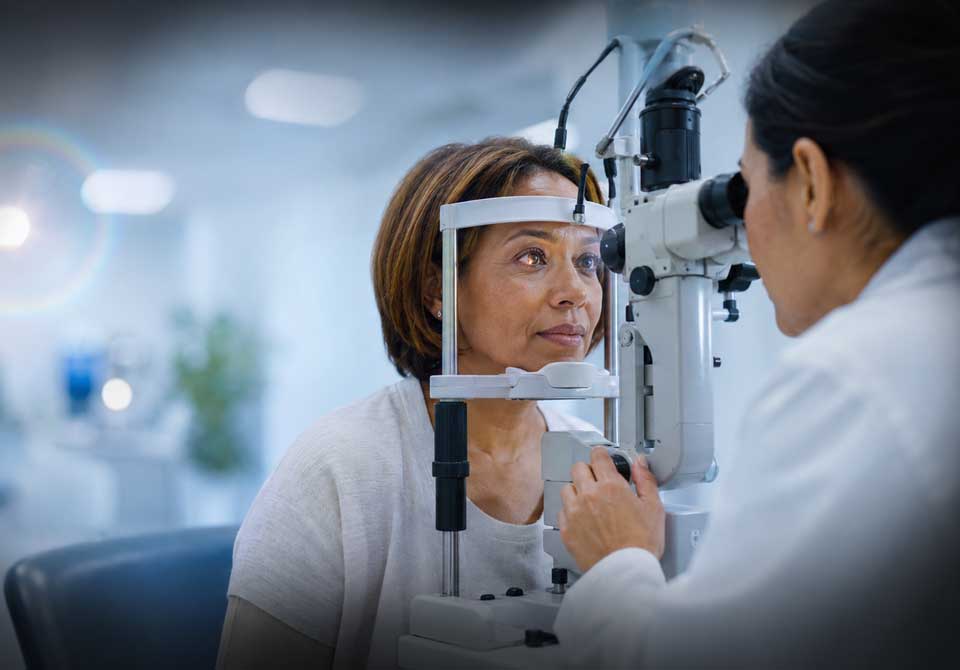
Get a comprehensive glaucoma screening at Kenia Eye Hospital. Quick, painless, and it could save your vision.
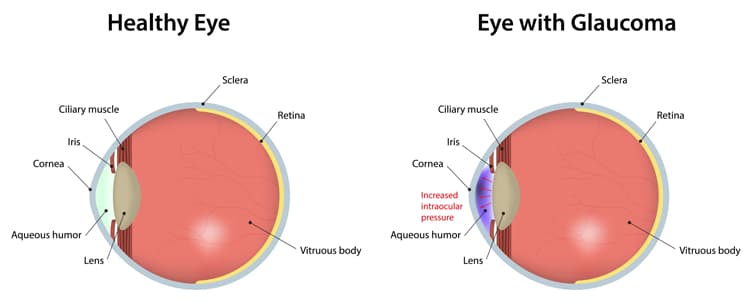
Glaucoma occurs when the natural fluid inside the eye (aqueous humour) cannot drain properly, causing pressure to build up and damage the optic nerve. Common causes include:
Regular glaucoma screening is especially important if you fall into any of these categories:
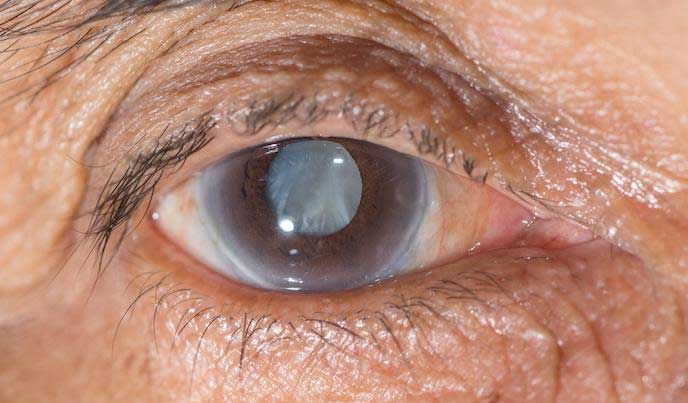
Most glaucoma types have no early symptoms, which is why regular screening is essential. However, watch for:
If you notice any of these symptoms, or are over 40 with a family history of glaucoma, schedule a glaucoma screening with our specialists at the earliest.
Glaucoma is not a single disease. Our glaucoma specialists treat every major type with a personalised care plan.
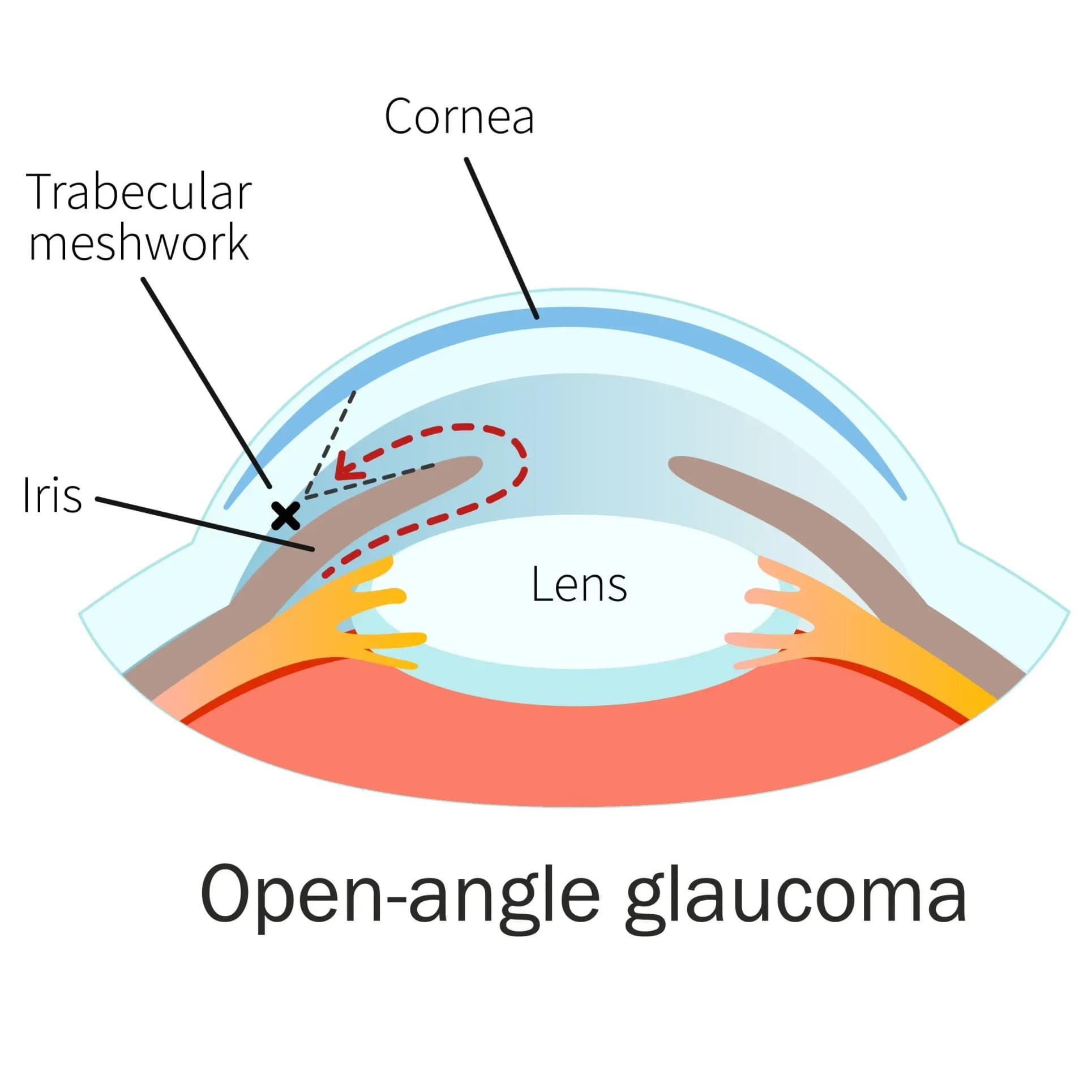
The most common type of glaucoma. Drainage channels gradually become clogged, causing a slow, painless rise in eye pressure and progressive optic nerve damage. It may be managed with eye drops, SLT laser, or surgery.
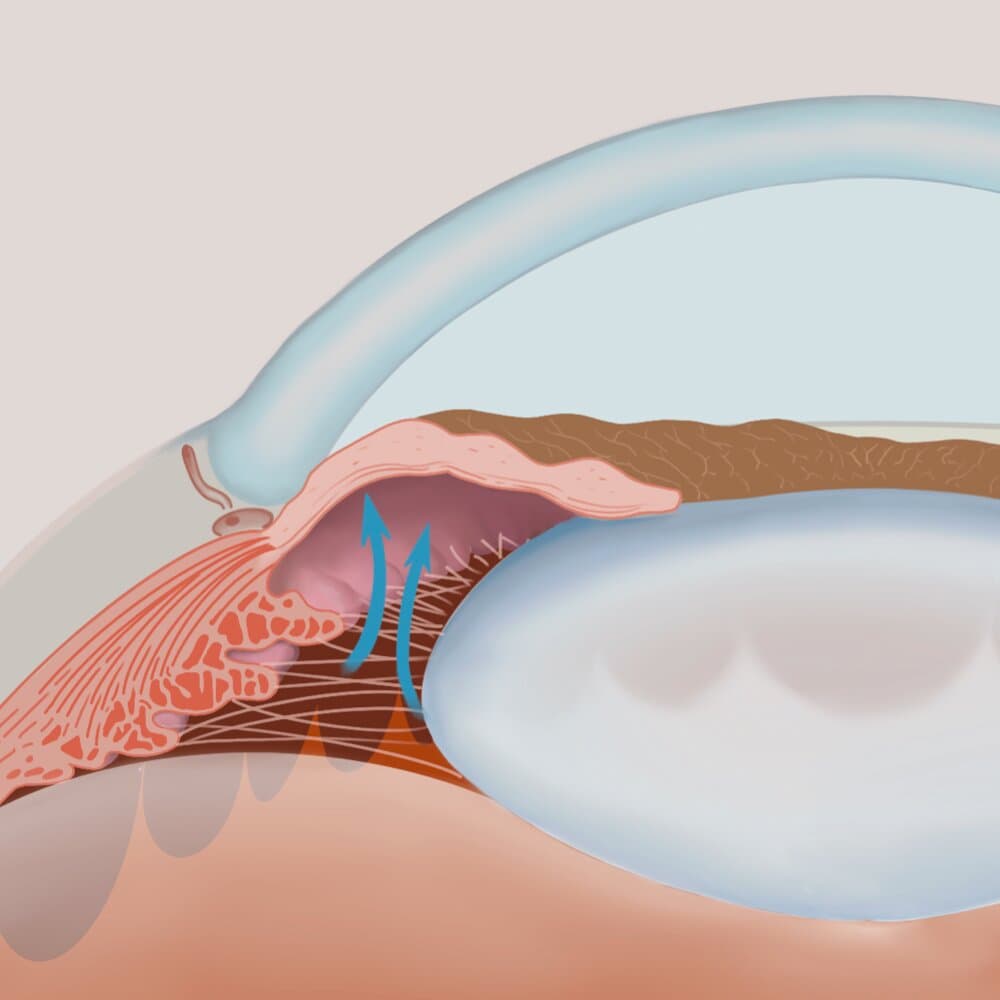
The iris suddenly blocks the drainage angle, causing a rapid rise in eye pressure, severe eye pain, headache, nausea, and blurred vision. This is a medical emergency requiring immediate laser or surgery. Kenia Eye Hospital offers 24x7 emergency care for angle-closure attacks.
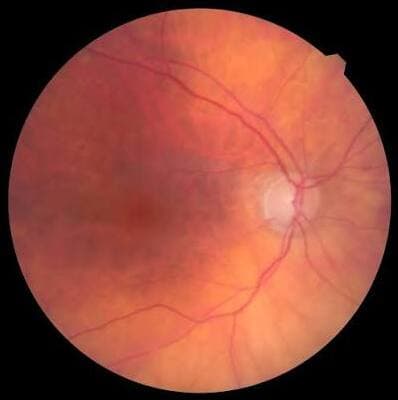
Optic nerve damage occurs even with normal eye pressure. Diagnosis requires advanced OCT and Visual Field testing, with pressure-lowering therapy tailored below the normal range.
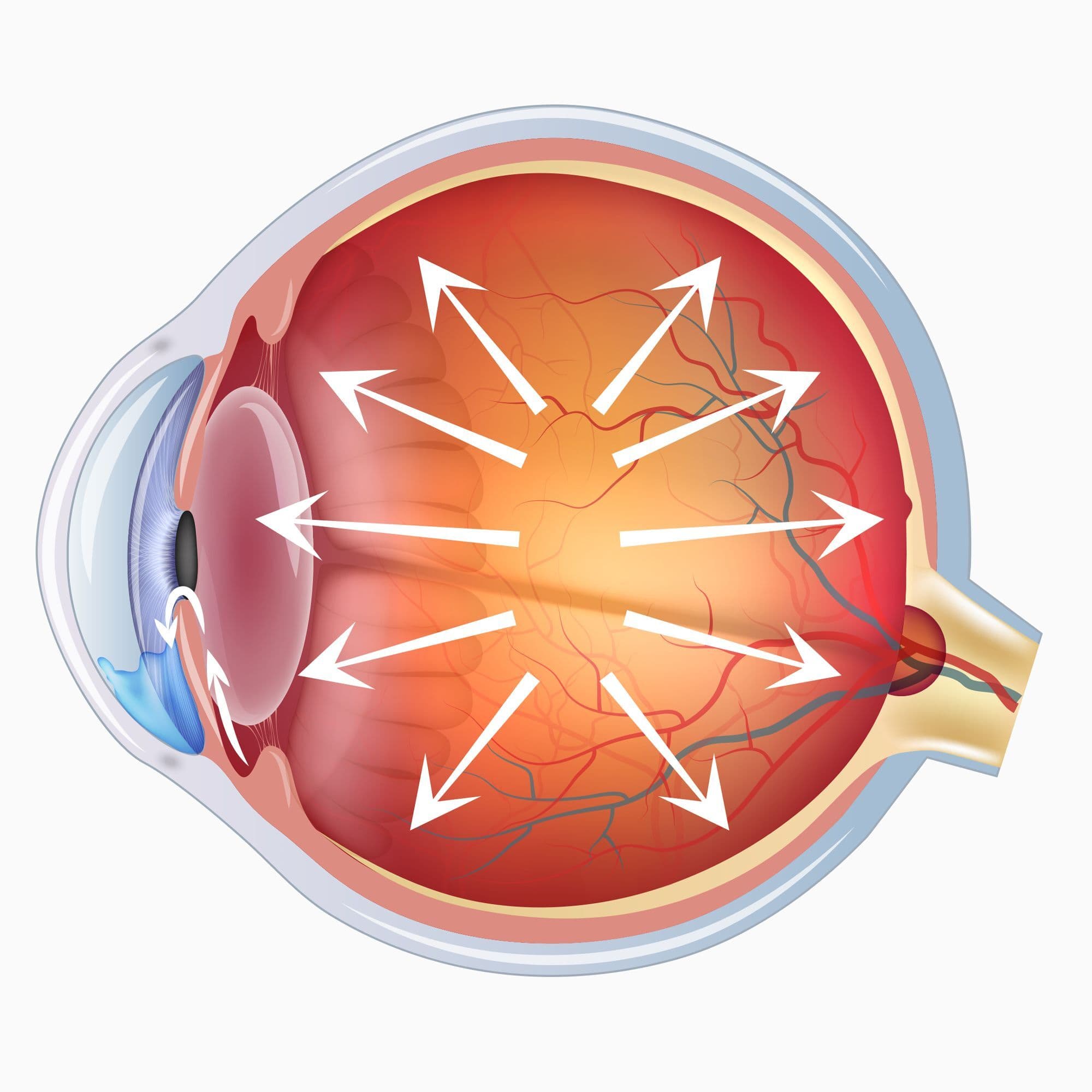
Caused by another condition such as diabetes, uveitis, trauma, or long-term steroid use. Treatment addresses both the underlying cause and the raised eye pressure.
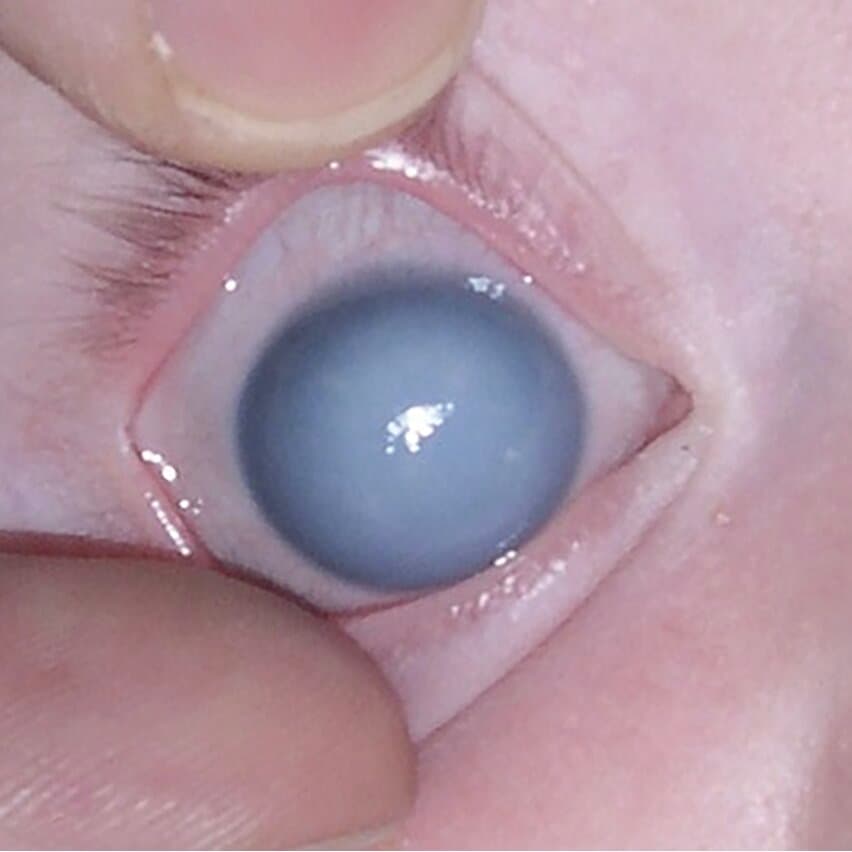
A rare form affecting newborns and children, caused by developmental abnormalities of the drainage system. It requires specialised paediatric surgical intervention.
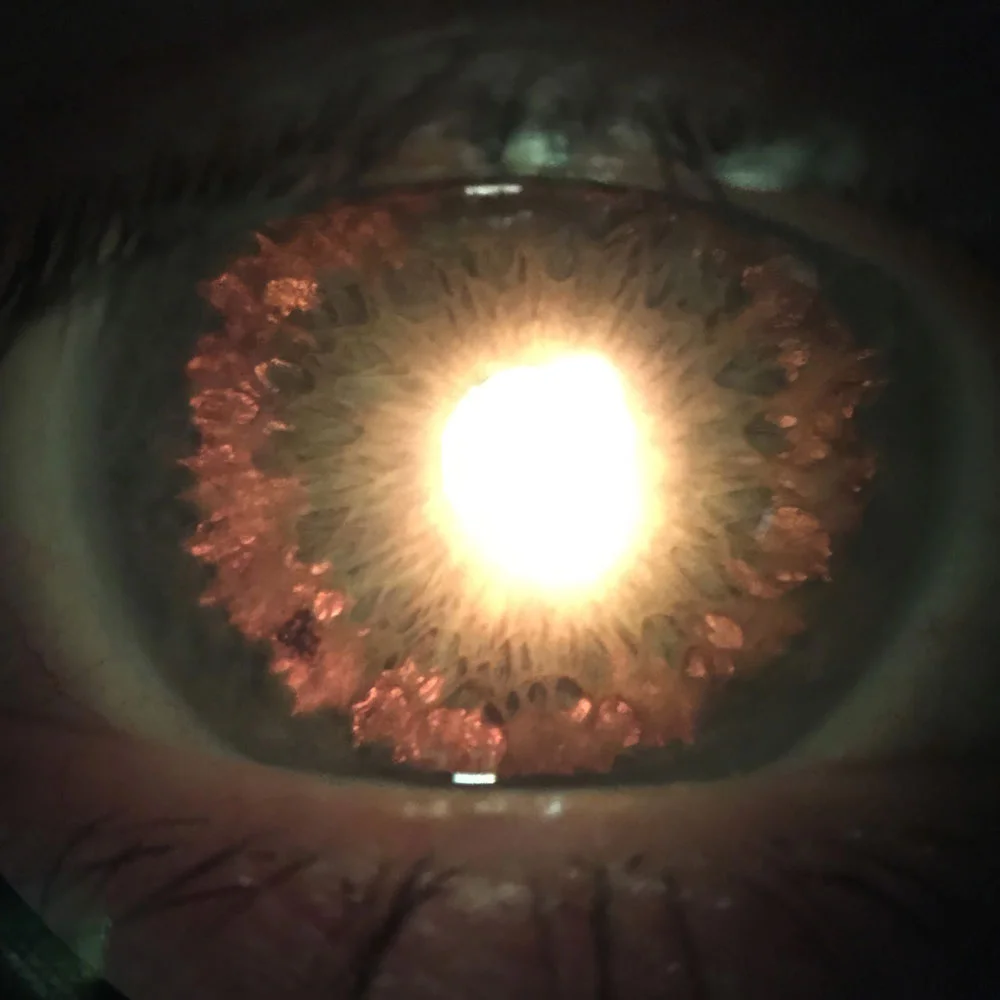
Pigment or protein deposits block the drainage channels. Depending on eye pressure and disease stage, treatment may include medications, SLT, or MIGS.
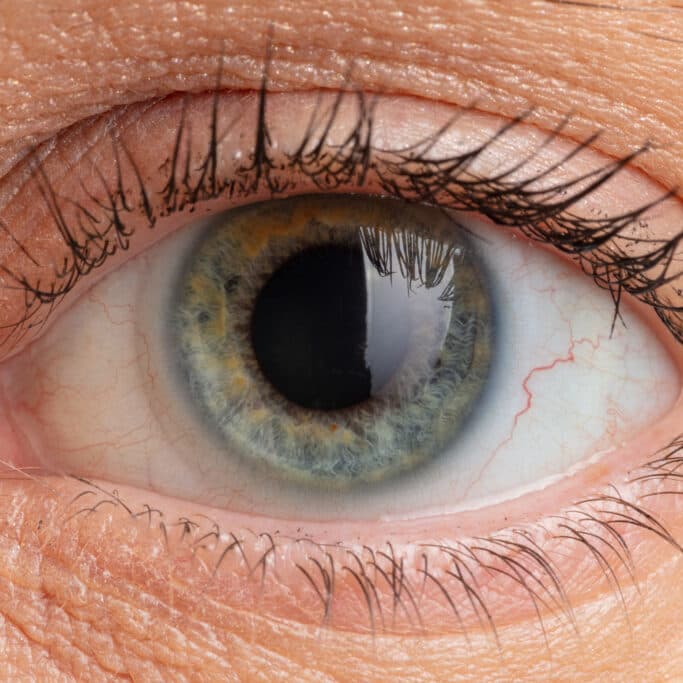
A complication of advanced diabetic eye disease or retinal vein occlusion. It requires coordinated retina and glaucoma management, available under one roof at Kenia Eye Hospital.
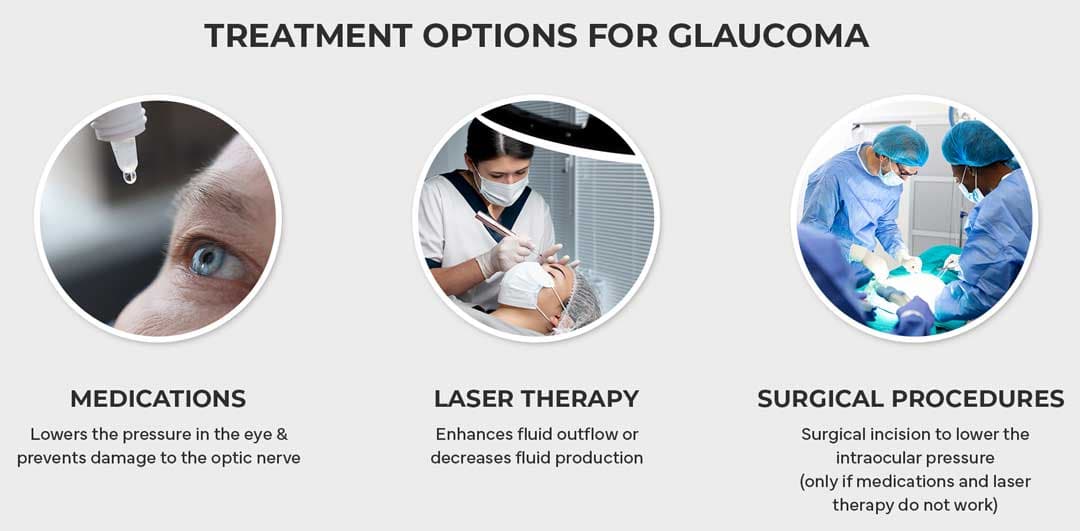
Glaucoma treatment aims to lower and maintain eye pressure at a safe target, preventing further optic nerve damage. Treatment is chosen based on the type and stage of glaucoma and may combine several approaches over a patient's lifetime.
Medical, laser, and surgical treatment options include:
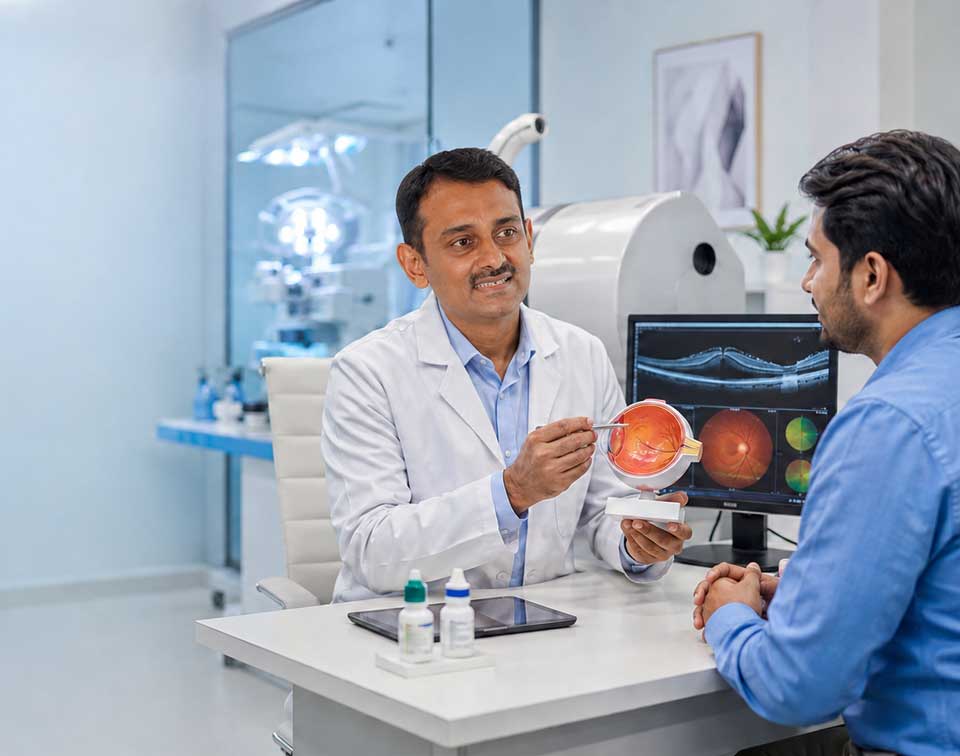
Your glaucoma treatment journey is structured for accurate diagnosis, personalised treatment, and lifelong care.
A detailed eye check including tonometry, gonioscopy, Pentacam HR corneal mapping, OCT for RNFL analysis, and Visual Field Analysis to assess eye pressure, drainage angles, optic nerve health, and peripheral vision loss.
Based on your glaucoma type, stage, and eye pressure profile, Dr. Vaishal Kenia recommends a medical, laser, surgical, or combined treatment path with clear goals, timelines, and follow-up.
Prescribed drops can be issued the same day with clear instructions. If laser or surgery is recommended, pre-operative investigations and consent are completed before scheduling.
SLT and LPI are short outpatient sessions of about 10 to 20 minutes. Non-penetrating glaucoma surgery, trabeculectomy, and MIGS are day-care procedures with same-day or overnight discharge under topical or local anaesthesia.
Most glaucoma laser procedures require no downtime. Surgical patients follow a structured recovery protocol with prescribed eye drops for 4 to 8 weeks.
Regular follow-ups every 3 to 6 months help monitor eye pressure, optic nerve status, and visual field changes so treatment can be adjusted to preserve vision.
Book a personalised glaucoma consultation with Dr. Vaishal Kenia. Precise diagnostics and personalised treatment planning under one roof.
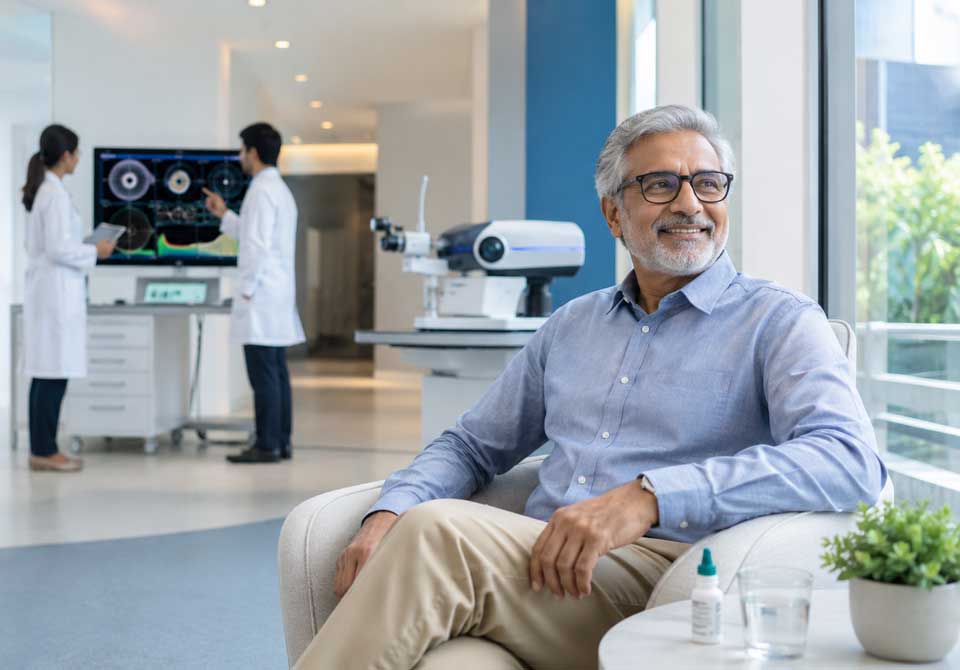
Glaucoma treatment is about preserving your remaining vision and quality of life for as long as possible. Timely, structured care offers measurable long-term benefits.
Early diagnosis and consistent treatment can significantly slow or halt further optic nerve damage.
OCT, Visual Field Analysis, and Pentacam HR support accurate staging and personalised target eye pressure setting.
Medical drops, SLT laser, non-penetrating surgery, MIGS, and drainage devices are available under one roof.
Non-penetrating glaucoma surgery and MIGS can offer lower complication rates and faster recovery than conventional filtration surgery.
Scheduled reviews every 3 to 6 months track progression and support timely treatment adjustments.
Managed eye pressure, a potentially lower medication burden, and clear communication help patients live confidently with glaucoma.
Kenia Eye Hospital is a pioneering centre in India for non-penetrating glaucoma surgery, offering safer, minimally invasive alternatives to conventional filtration procedures.
Glaucoma care is led by Dr. Vaishal Kenia, an ESCRS-recognised surgeon with 28+ years of experience and four ESCRS Video Symposium selections (2018, 2019, 2020, and 2022) for complex eye surgery management.
Every patient benefits from OCT for RNFL and macular analysis, Humphrey Visual Field Analysis, Pentacam HR corneal mapping, Corvis ST biomechanical analysis, and OPTOS ultra-wide retinal imaging.
From daily eye drops and SLT laser to non-penetrating glaucoma surgery, trabeculectomy, drainage devices, and MIGS, every treatment option is available under one roof.
Since 1998, Kenia Eye Hospital has managed thousands of glaucoma patients across Mumbai with structured, lifelong care protocols.
Glaucoma treatment takes place in a NABH-accredited multi-superspeciality eye hospital where cataract, retina, and cornea specialists collaborate on complex cases such as neovascular glaucoma and combined cataract-glaucoma surgery.
Acute angle-closure glaucoma is a medical emergency. Our 24x7 emergency desk supports urgent laser or surgical intervention when needed.
Patients receive full cost transparency, with cashless insurance processing, CGHS coverage, and no-cost EMI options where applicable.
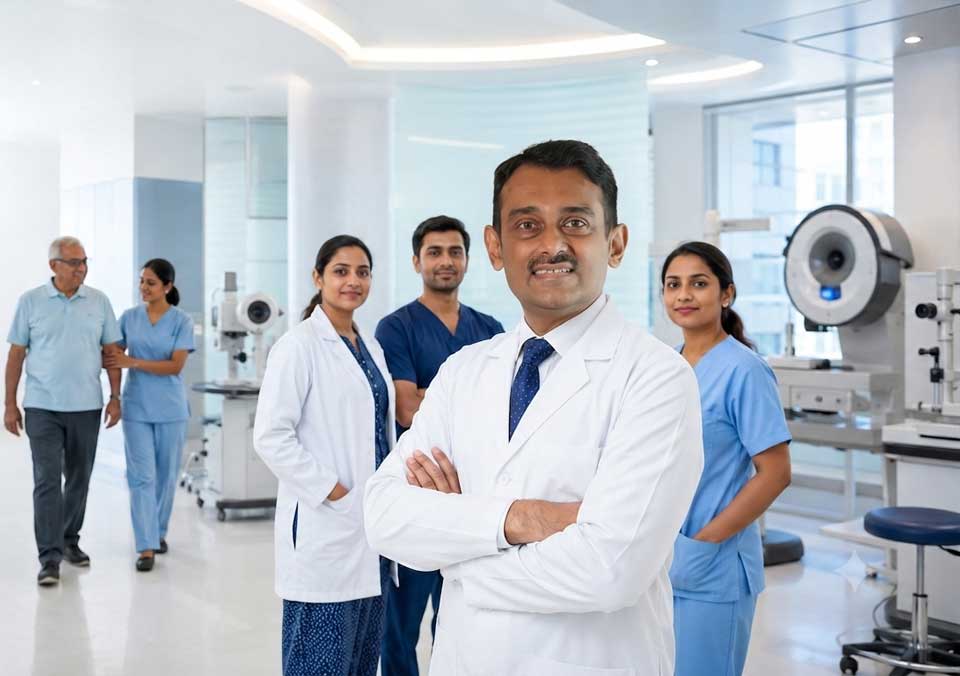

Glaucoma treatment cost in Mumbai at Kenia Eye Hospital varies based on the treatment type, stage of glaucoma, and diagnostic requirements. Each glaucoma case is unique, and pricing is discussed transparently after a complete diagnostic evaluation.
Factors that influence glaucoma treatment cost:
Most glaucoma surgeries and diagnostic evaluations are covered under health insurance and CGHS, with cashless processing supported. After your glaucoma evaluation, our team provides a transparent, all-inclusive cost breakdown so you can plan long-term care with clarity.
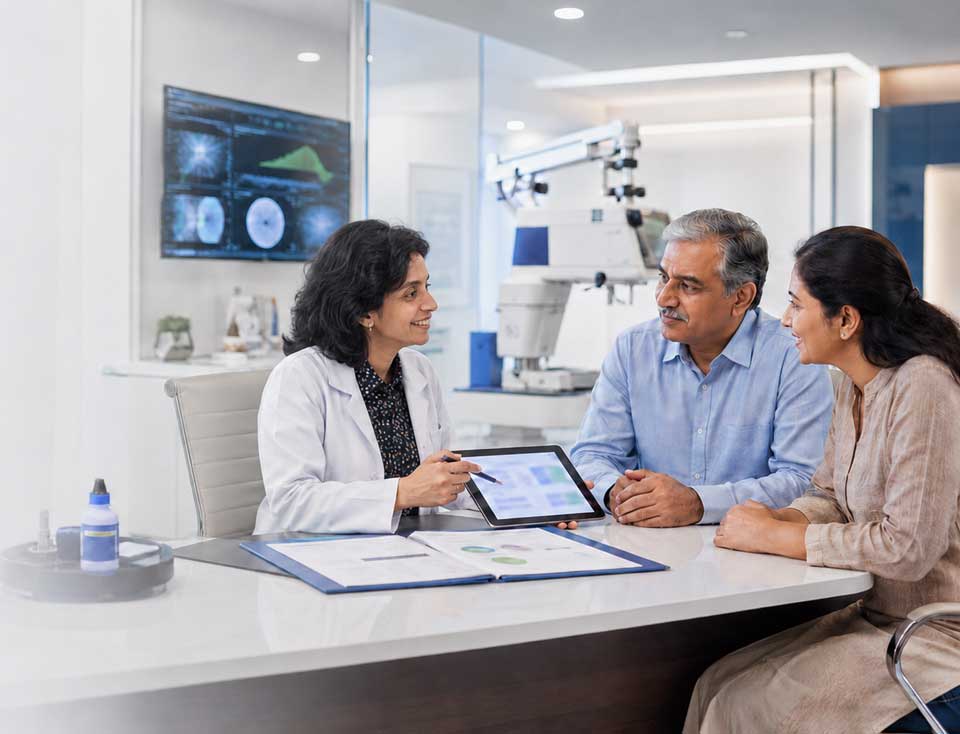
Explore other advanced eye care services at Kenia Eye Hospital, along with expert insights on glaucoma, optic nerve health, and vision protection.
See what our patients say: read verified patient testimonials from across Mumbai and learn how structured, lifelong glaucoma care has helped protect their vision.
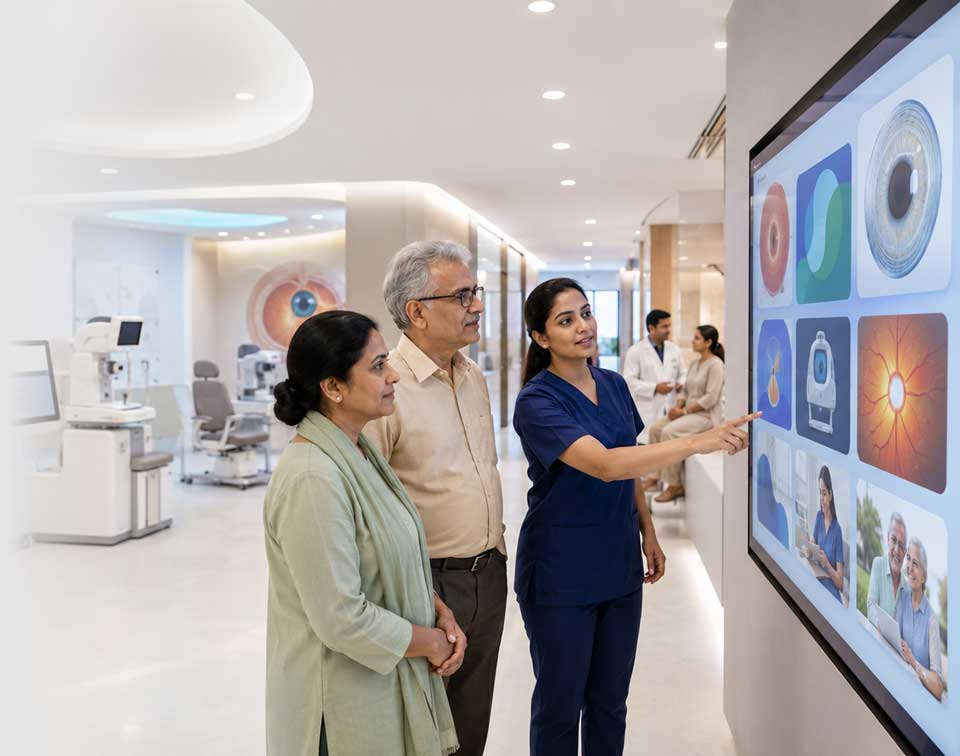
Take the first step towards protecting your long-term vision. Get a personalised glaucoma plan from Dr. Vaishal Kenia and our glaucoma specialists at Mumbai's established glaucoma clinic. Precise diagnostics, transparent pricing, no obligations.
Call: +91 75064 99962 | Email: info@keniaeyehospital.com
