
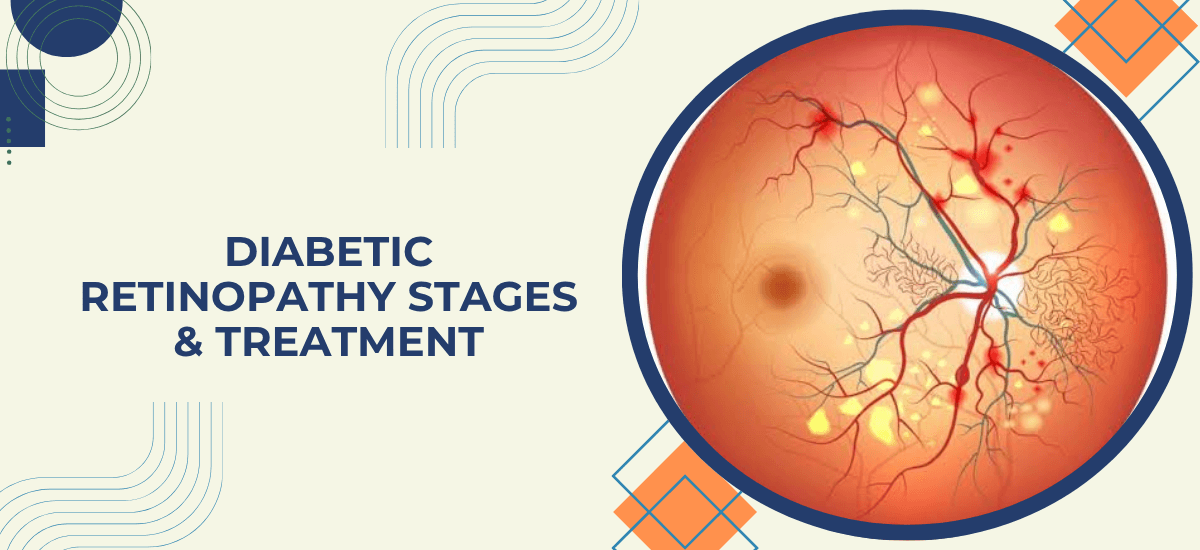
Diabetic retinopathy is damage to the blood vessels of the retina caused by prolonged high blood sugar levels. It is most often caused by years of poorly controlled diabetes, though pregnancy, high blood pressure, and high cholesterol can accelerate its progression. Treatment depends on the stage at diagnosis, since the disease can be managed effectively in its early stages but becomes far harder to reverse once it progresses to advanced, vision-threatening forms.
Mild, early-stage changes in the retina often cause no noticeable symptoms at all. Blurred vision, dark spots, or difficulty seeing at night is different, and it usually means the disease has already progressed, which is why regular screening matters more than waiting for symptoms at an Eye Hospital in Mumbai.
"Diabetic retinopathy is deceptive because it can silently progress for years while vision still feels completely normal. By the time a patient notices blurring or dark spots, we're often already looking at a more advanced stage. The best outcomes I see are in patients who get their eyes screened every year from the moment they're diagnosed with diabetes, not the ones who wait for a symptom to bring them in."
— Dr. Vaishal Kenia, Chairman and Medical Director, Kenia Eye Hospital
What Is Diabetic Retinopathy?
High blood sugar levels gradually damage the small blood vessels that supply the retina, causing them to leak fluid, become blocked, or, in advanced stages, prompt the growth of abnormal new vessels. Since the retina depends entirely on this blood supply to function, this damage accumulates over years, often without any symptoms until it's fairly advanced.
Diabetic retinopathy is broadly grouped into two categories, with a third complication that can appear alongside either:
- Non-Proliferative Diabetic Retinopathy (NPDR), the earlier stage, where blood vessels weaken, leak, or become blocked without new vessel growth.
- Proliferative Diabetic Retinopathy (PDR), the advanced stage, where the retina responds to blocked blood supply by growing fragile new vessels prone to bleeding.
- Diabetic Macular Edema (DME), fluid buildup at the macula that can develop at any stage and is the most common cause of vision loss in diabetic patients.
Progression from one stage to the next isn't guaranteed, especially with good blood sugar control, which is exactly why early detection changes the outlook so significantly.
Living with diabetes and haven't had a retina screening this year? Don't wait for symptoms. Book an Appointment
What Are the Stages of Diabetic Retinopathy?

Diabetic retinopathy typically progresses through a predictable sequence of stages, each with a distinct level of risk.
- Mild NPDR. Small, balloon-like swellings called microaneurysms appear in the retina's tiny blood vessels. Vision is usually unaffected at this stage.
- Moderate NPDR. More blood vessels become blocked, disrupting blood flow to parts of the retina and increasing the risk of progression.
- Severe NPDR. A significant number of blood vessels are blocked, and the retina begins signalling for new blood vessel growth. This stage carries a high risk of progressing to PDR within about a year without treatment.
- Proliferative Diabetic Retinopathy (PDR). Abnormal new blood vessels grow on the retina's surface. These vessels are fragile and prone to bleeding, and this stage carries the highest risk of severe vision loss and retinal detachment.
Diabetic Macular Edema can develop alongside any of these stages, which is why screening looks at both the overall stage and the macula specifically.
What Causes Diabetic Retinopathy to Progress?
A handful of factors most strongly influence how quickly diabetic retinopathy develops and advances.
- Duration of diabetes, since risk rises the longer someone has lived with the condition, regardless of type.
- Poor blood sugar control, with consistently high HbA1c levels directly accelerating vessel damage.
- High blood pressure, which adds further strain to already weakened retinal blood vessels.
- High cholesterol, contributing to the fatty deposits that can worsen vessel blockage.
- Pregnancy, which can accelerate existing diabetic retinopathy and requires closer monitoring.
- Smoking, which worsens blood vessel health throughout the body, including the retina.
- Kidney disease, often linked to diabetic retinopathy through shared vascular damage.
If diabetic retinopathy has already reached a stage requiring treatment, our guide on retinal injections for diabetic eye disease explains how these medications work to protect vision.
What Are the Symptoms of Diabetic Retinopathy?

The most important thing to understand about diabetic retinopathy's symptoms is that early stages typically have none at all. Symptoms tend to appear only once the disease has progressed.
Symptoms to watch for include:
- Blurred or fluctuating vision, which can vary with blood sugar levels.
- Dark spots or streaks in vision, often caused by bleeding from fragile new vessels.
- Impaired color vision, a subtler change that's often noticed later.
- Poor night vision, making low-light situations noticeably harder.
- Sudden vision loss, which can occur with significant bleeding or advanced macular edema.
Because vision can remain normal well into the disease's progression, symptoms should never be relied on as the trigger for a first screening.
Noticed any changes in your vision alongside your diabetes? Get a thorough retina check. Book an Appointment or call +91 75064 99962
How Is Diabetic Retinopathy Diagnosed?
Diagnosis relies on a direct, detailed view of the retina, since the disease's earliest changes are only visible through specialised imaging.
- Dilated fundus examination, allowing a full view of the retina and its blood vessels.
- Optical Coherence Tomography (OCT), used to detect and measure diabetic macular edema with precision.
- Fundus Fluorescein Angiography (FFA), a dye-based imaging test that highlights leaking or blocked blood vessels in detail.
- Fundus photography, used to document the retina's current state and track changes over subsequent visits.
- Visual acuity testing, to assess how much, if any, vision has already been affected.
Annual screening from the point of a diabetes diagnosis is the standard recommendation, regardless of whether any vision symptoms are present.
How Is Diabetic Retinopathy Treated?
Treatment is tailored to the specific stage, with the overarching goal of preventing further progression rather than reversing existing damage.
| Stage | Typical Treatment |
|---|---|
| Mild to moderate NPDR | Blood sugar and blood pressure control, monitoring every 6 to 12 months |
| Severe NPDR | Closer monitoring every 3 to 4 months, early laser treatment in select cases |
| Proliferative Diabetic Retinopathy (PDR) | Panretinal (scatter) laser photocoagulation, anti-VEGF injections |
| Diabetic Macular Edema (any stage) | Anti-VEGF injections, focal laser treatment |
| Advanced disease with bleeding or detachment | Vitrectomy surgery |
Kenia Eye Hospital's retina clinic in Mumbai is equipped to manage the full range of these stages, from routine monitoring through to laser and surgical treatment, under one roof.
When Should You Get Screened for Diabetic Retinopathy?

Screening guidelines are based on time since diagnosis and risk factors, not on whether symptoms are present.
- At the time of diagnosis for Type 2 diabetes, since retinopathy may already be present.
- Within five years of diagnosis for Type 1 diabetes.
- Annually thereafter, or more frequently if any retinopathy has already been detected.
- Every trimester during pregnancy, for women with pre-existing diabetes, given the accelerated risk.
- Immediately, regardless of schedule, if new blurring, dark spots, or vision changes appear.
Sticking to this schedule, rather than waiting for a symptom, is what makes the biggest difference to long-term outcomes.
Why Choose Kenia Eye Hospital for Diabetic Retinopathy Care?
Diabetic retinopathy management depends on catching changes early and tracking them consistently over years, not just treating a single flare-up. Kenia Eye Hospital brings 28 years of experience in diabetic eye care, supported by OCT, Fundus Fluorescein Angiography, and retinal laser and injection facilities to manage every stage of the disease.
Patients also benefit from a structured screening approach that doesn't rely on symptoms to prompt the next visit. That consistency is what places Kenia among the best eye hospital in Mumbai choices for long-term diabetic eye care.
Managing diabetes and due for a retina screening? Get it checked today. Book an Appointment or call +91 75064 99962
