
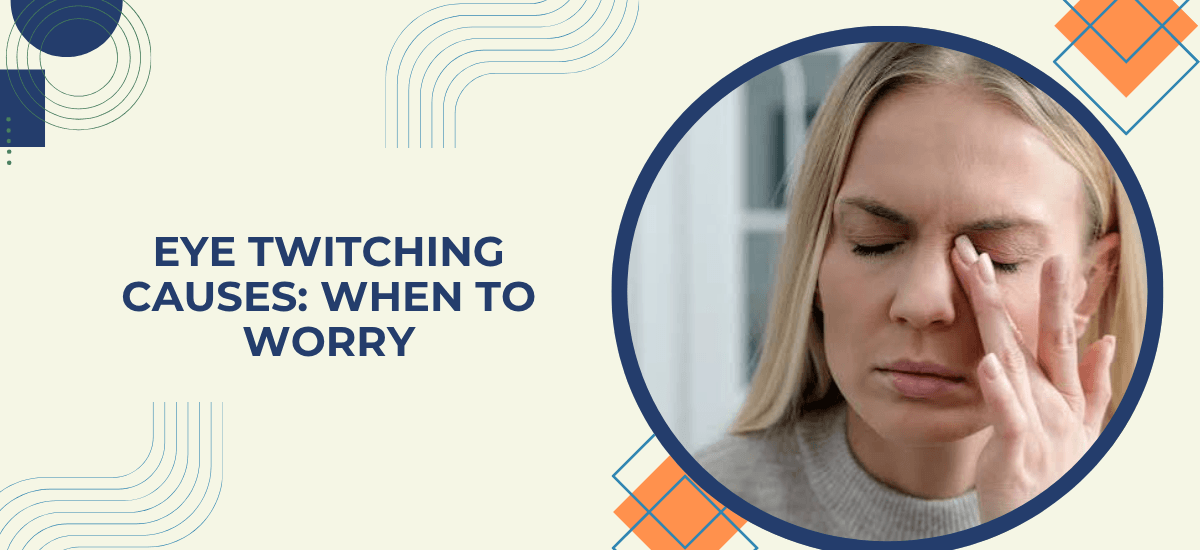
Eye twitching, medically called myokymia, is an involuntary, repetitive spasm of the muscle around the eyelid, usually the lower lid. It is most often caused by everyday triggers such as stress, lack of sleep, excessive caffeine, or prolonged screen use, and it typically resolves on its own within a few days once the trigger is addressed. Treatment depends on the underlying cause, since in the vast majority of cases eye twitching is a temporary nuisance rather than a sign of a serious condition.
An occasional flutter in one eyelid that comes and goes over a day or two is common and usually harmless. Twitching that persists for weeks, spreads beyond the eyelid, or is accompanied by other symptoms is different, and it needs proper evaluation at an Eye Hospital in Mumbai rather than being managed by simply waiting it out.
"Almost every patient who comes in worried about eye twitching leaves relieved, because the cause is nearly always something ordinary, poor sleep, too much coffee, too many hours on a screen. What I do pay attention to is when the twitching doesn't stay confined to the eyelid, or when it's been going on for months. That pattern is rare, but it's the one worth ruling out properly rather than assuming it will pass."
— Dr. Vaishal Kenia, Chairman and Medical Director, Kenia Eye Hospital
What Is Eye Twitching (Myokymia)?
Eye twitching happens when the orbicularis oculi, the muscle that allows the eyelid to close, fires involuntarily in small, repeated spasms. It's usually painless, doesn't affect vision, and is rarely visible to anyone else even when it feels obvious to the person experiencing it.
Eye twitching generally falls into three patterns:
- Simple myokymia, brief, mild twitching confined to the lower eyelid, almost always linked to lifestyle triggers and resolving within days.
- Benign essential blepharospasm, a rarer condition involving more forceful, frequent blinking or squeezing of both eyelids, which needs specialist management.
- Hemifacial spasm, an uncommon condition where twitching extends beyond the eyelid to other muscles on one side of the face, warranting a neurological evaluation alongside an eye examination.
The overwhelming majority of cases fall into the first category and need nothing more than addressing the underlying trigger.
Eye twitching that won't go away? Get a quick, reassuring check. Book an Appointment
What Causes Eye Twitching?

Eye twitching is almost always tied to a specific, identifiable trigger. Most people can trace it back to one or more of the following.
- Stress and anxiety, one of the most common triggers, often appearing during particularly demanding weeks at work or home.
- Lack of sleep, which affects the nervous system's control over small involuntary muscle movements.
- Excessive caffeine or alcohol intake, both known to overstimulate nerve activity.
- Prolonged screen use, contributing to eye strain and dryness that can trigger twitching.
- Eye strain from uncorrected refractive error, where the eye muscles are working harder than they should.
- Dry eyes, since a dry ocular surface irritates the nerve endings around the eyelid.
- Nutritional factors, particularly low magnesium levels, though this link is less consistent than the others.
- Certain medications, including some used for psychiatric or neurological conditions, as a recognised side effect.
If long hours on screens are a regular part of your day, our guide on digital eye strain covers how it builds up and what actually helps beyond just resting your eyes.
What Are the Symptoms of Eye Twitching?
Eye twitching has a fairly distinct feel, but the pattern and duration matter more than the sensation itself when deciding whether it needs attention.
Typical symptoms include:
- A fluttering or pulsing sensation, usually in the lower eyelid of one eye.
- Twitching that comes and goes, often more noticeable when tired, stressed, or after caffeine.
- No visible movement to others, even though it can feel pronounced to the person experiencing it.
- Episodes lasting from a few seconds to a couple of minutes, recurring intermittently over hours or days.
- No associated pain or vision change, which is typical of simple myokymia.
If twitching starts involving the upper eyelid, both eyes, or other parts of the face, or is accompanied by drooping, discharge, or vision changes, it has moved outside the pattern of ordinary myokymia.
Not sure if your twitching is the usual kind or something to look into? A quick exam settles it. Book an Appointment or call +91 75064 99962
How Is Eye Twitching Diagnosed?

Most cases of eye twitching don't need extensive testing, since the history alone is usually enough to confirm a benign cause. A more detailed workup is reserved for twitching that doesn't fit the typical pattern.
- Detailed history taking, covering sleep, caffeine intake, stress levels, screen habits, and duration of symptoms.
- Slit-lamp examination, to check for dry eye or any surface irritation contributing to the twitching.
- Refraction test, to rule out uncorrected refractive error as a strain-related trigger.
- Neurological referral, considered only when twitching spreads beyond the eyelid or is accompanied by other facial symptoms.
For the vast majority of patients, this assessment is enough to confirm a benign cause and rule out anything that needs further investigation.
How Is Eye Twitching Treated?
Treatment is guided almost entirely by the underlying trigger. Addressing that trigger resolves the twitching in most cases without any medical intervention.
| Underlying Cause | Typical Approach |
|---|---|
| Stress or lack of sleep | Improved sleep routine, stress management, and rest |
| Excess caffeine or alcohol | Gradual reduction in intake |
| Digital eye strain or dry eyes | Lubricating drops, screen breaks, correcting refractive error |
| Uncorrected refractive error | Updated glasses or contact lens prescription |
| Benign essential blepharospasm | Botulinum toxin injections under specialist care |
| Hemifacial spasm | Neurology referral alongside ophthalmic evaluation |
If dryness or strain seems to be playing a role, our guide on dry eye disease covers the signs to watch for and how it's managed long-term.
When Should You See a Doctor for Eye Twitching?
Occasional twitching that comes and goes over a day or two rarely needs a visit. The following signs suggest it's worth getting checked rather than waiting it out.
- Twitching that persists for more than one to two weeks without improving.
- Twitching that spreads to the upper eyelid, both eyes, or other parts of the face.
- Eyelid closing completely during a spasm, or a noticeable drooping eyelid.
- Twitching accompanied by redness, discharge, or vision changes.
- Any facial weakness, drooping, or asymmetry appearing alongside the twitching.
These patterns are uncommon, but they're the ones where a proper evaluation, rather than assuming it will pass, is the right call.
Why Choose Kenia Eye Hospital for Eye Twitching Evaluation?
Most eye twitching is harmless, but knowing that for certain, rather than just hoping, is what brings real reassurance. Kenia Eye Hospital brings 28 years of clinical experience in diagnosing eyelid and ocular surface conditions, with the diagnostic tools needed to quickly separate a benign, lifestyle-driven twitch from something that needs closer attention.
Patients also benefit from a thorough, unhurried consultation that looks at sleep, screen habits, and refractive status together, rather than treating the twitch in isolation. That combined approach is what places Kenia among the best eye hospital in Mumbai choices for patients seeking clarity on persistent or unusual eye symptoms.
Persistent eye twitching affecting your day-to-day? Let's find out what's behind it. Book an Appointment or call +91 75064 99962
