
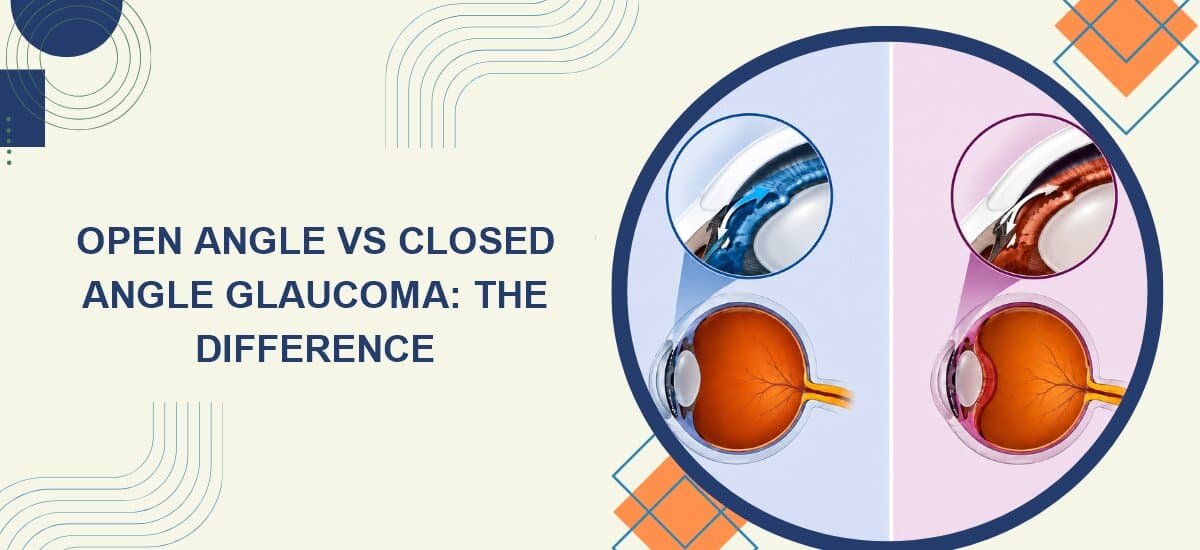
Two types of glaucoma, one drain, two very different ways it fails. Open-angle keeps the drainage channel wide open but fluid barely moves through it, so pressure builds up quietly over years without any warning. Closed-angle glaucoma occurs when the iris slides across and physically blocks the drain, allowing pressure to reach dangerous levels in a matter of hours. That structural difference separates a condition you can manage over time from one that may need attention the same day.
What makes open-angle glaucoma genuinely dangerous is how little it announces itself. No pain, no redness, just the edges of vision slowly going dark while everything else feels completely fine. People often come in only when something finally feels off and the nerve is already significantly damaged. Closed-angle glaucoma at least causes enough chaos to send people straight to a clinic: sudden eye pain, blurred vision, redness, and sometimes nausea or vomiting. Unpleasant, but hard to ignore.
Dr. Vaishal Kenia, Chairman and Medical Director at Kenia Eye Hospital in Mumbai, says: "Open-angle glaucoma is the one that worries me most because patients feel nothing until the nerve is already damaged. Closed-angle is dramatic but people come in fast. Both need treatment, just on completely different timelines."
Open Angle vs Closed Angle Glaucoma: Key Differences
The drainage angle is what separates them structurally. Everything else, including speed, symptoms, and urgency, follows from that one difference:
| Feature | Open Angle | Closed Angle |
|---|---|---|
| Drainage angle | Open, not blocked | Iris blocks the drain |
| Pressure rise | Slow, over years | Rapid, within hours |
| Symptoms | None in early stages | Sudden pain, blur, redness |
| Onset | Silent, gradual | Can be an acute emergency |
| Vision loss | Peripheral first | Can be sudden if untreated |
| Treatment urgency | Managed over time | Needs same-day attention |
There are other types too. Normal-tension glaucoma is where nerve damage happens even though pressure tests come back normal, which means standard screening can miss it. Secondary glaucoma comes from another condition, such as diabetes, steroid use, eye injury, or inflammation, with the pressure problem being a downstream consequence. Pigmentary and pseudoexfoliative glaucoma are subtypes where debris from inside the eye gradually clogs the drainage pathway over time.
For a proper assessment of which type is present and how far along it is, the glaucoma clinic at Kenia Eye Hospital runs tonometry, visual field analysis, OCT, and gonioscopy before any treatment decision is made.
How Is Each Type of Glaucoma Treated?
The nerve damage that has already happened cannot be undone. That is true for all types of glaucoma. Treatment aims to slow or stop further loss, and the approach varies depending on which type you are dealing with.
Open-angle glaucoma usually starts with daily pressure-lowering eye drops. Some drops reduce how much fluid the eye produces, while others improve how it drains. Many patients manage well on drops for years. When drops do not bring pressure low enough, selective laser trabeculoplasty can be the next step. This laser improves drainage through the existing channel. Surgery comes into the picture when both drops and laser are not doing enough.
Closed-angle glaucoma is different. An acute attack needs to be treated the same day. Medication brings the pressure down quickly, followed by laser iridotomy, where a small opening is made in the iris to create an alternative drainage route. Chronic closed-angle glaucoma may be managed more like open-angle glaucoma day to day, but iridotomy is often done preventively because of the anatomy involved.
Normal-tension glaucoma is treated by pushing pressure even lower than normal, since the optic nerve is sensitive to levels that would not usually cause damage. Secondary glaucoma means addressing whatever is driving it alongside pressure control. For a breakdown of what glaucoma surgery involves and what it costs in Mumbai, the glaucoma surgery cost guide has the detail.
Why Choose Kenia Eye Hospital
Kenia Eye Hospital opened in Santacruz (West), Mumbai in 1998 and has been managing glaucoma across all its types ever since. The diagnostic workup includes tonometry, visual field testing, OCT of the optic nerve, and gonioscopy to examine the drainage angle directly. That combination identifies the type, stages the damage, and guides the treatment plan.
NABH, QAI, and FEQH accredited. CGHS empanelled. If you are over 40, have a family history of glaucoma, or have not had an eye pressure check in a while, it is worth getting one done. The damage glaucoma causes is permanent. Catching it early does not have to be. Call +91 75064 99962 to book.
