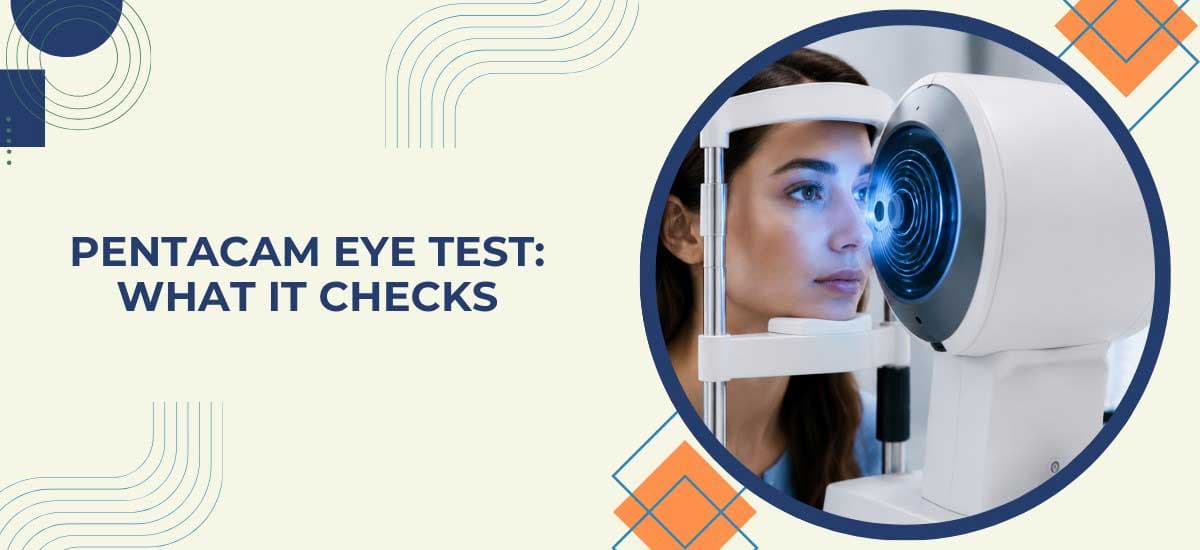
A Pentacam eye test is a quick, non-contact scan that builds a detailed three-dimensional map of your cornea and the front portion of your eye. The Pentacam checks corneal shape, thickness, and curvature on both surfaces, and screens for conditions such as keratoconus that a standard eye test can miss. It is used most often to plan LASIK and cataract surgery accurately and to catch corneal problems early.
The scan takes only seconds per eye and involves no drops, no touch, and no discomfort. For anyone considering refractive or cataract surgery at an Eye Hospital in Mumbai, it has become one of the most important checks carried out before any treatment decision is made.
"A cornea can look completely normal in a routine examination and still carry a weakness that makes laser surgery risky. The Pentacam reveals that weakness before surgery rather than after, and that single finding often changes the entire plan." — Dr. Vaishal Kenia, Chairman and Medical Director, Kenia Eye Hospital
What Does the Pentacam Eye Test Check?
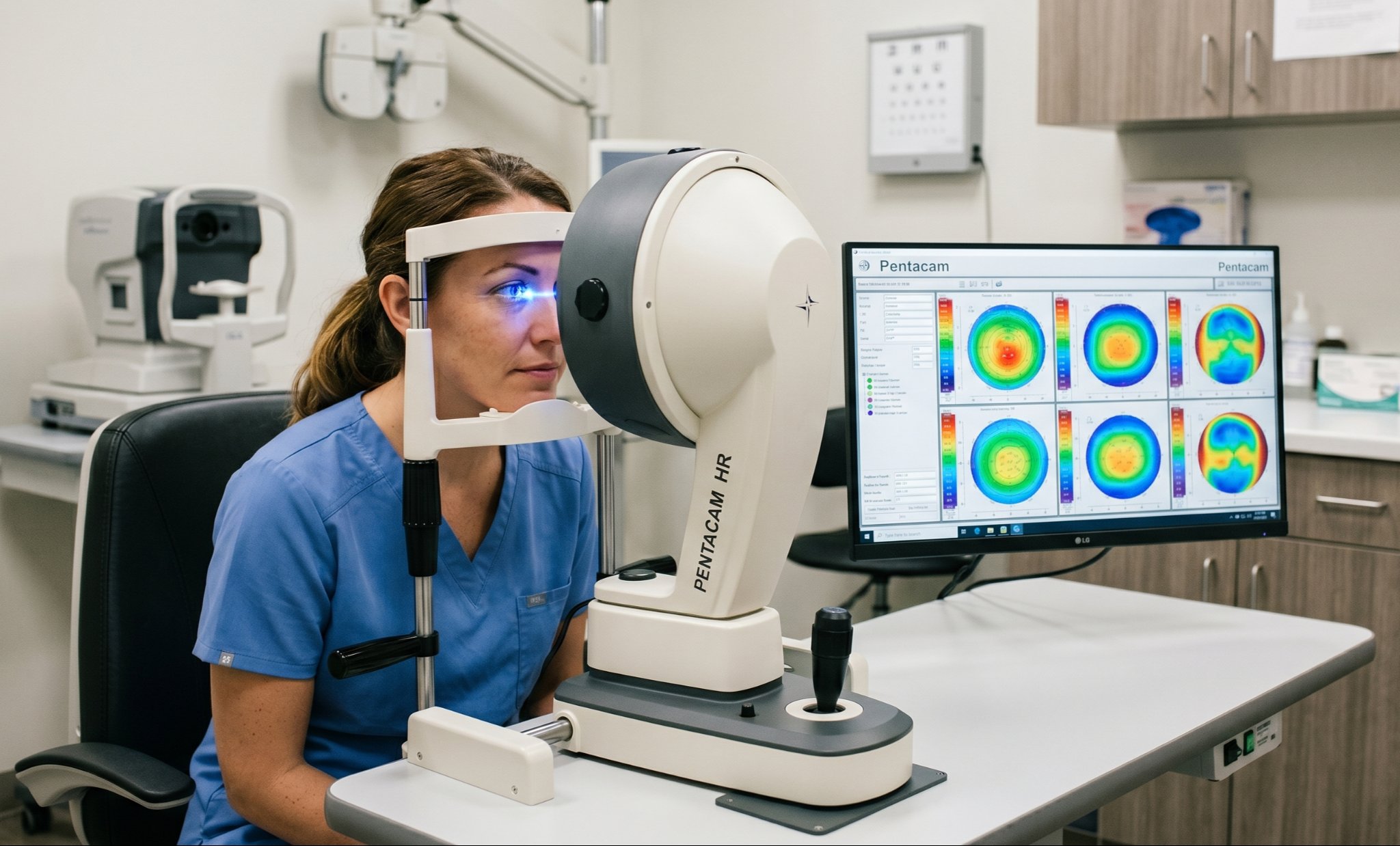
The Pentacam uses a rotating Scheimpflug camera that captures thousands of measurement points as it sweeps across the eye. From those points it builds a complete picture of the cornea and the anterior chamber.
- Corneal topography and curvature: It maps the shape of both the front and back surfaces of the cornea, which a standard test cannot assess.
- Corneal thickness, or pachymetry: It measures thickness across the entire cornea rather than the central point alone.
- Elevation maps: It highlights areas sitting higher or lower than expected, an early indicator of corneal weakness.
- Anterior chamber depth and angle: It assesses the space between the cornea and the iris, which is useful in glaucoma evaluation.
- Lens density: It can gauge clouding of the natural lens, which supports cataract assessment.
Together these readings give an ophthalmologist a level of structural detail that the Pentacam HR system is specifically built to provide.
Planning LASIK or cataract surgery? Book a complete diagnostic assessment with a specialist. Book an Eye Test
Why Would a Doctor Recommend a Pentacam Test?
A Pentacam test is rarely ordered on its own. It usually forms part of planning for a procedure or investigating a specific concern.
- Before LASIK or refractive surgery: It screens the cornea for hidden thinning or irregularity that would make laser surgery unsafe. If you are weighing up laser vision correction, our guide on LASIK candidacy explains who qualifies.
- Before cataract surgery: Precise corneal measurements help select the correct intraocular lens and plan astigmatism correction.
- To detect keratoconus: The test identifies keratoconus in its early, subclinical stage, often before vision is noticeably affected.
- To monitor known corneal disease: Repeat scans show whether a condition is stable or progressing.
A recommendation for a Pentacam scan is therefore a sign of careful surgical planning rather than a cause for worry.
What Happens During a Pentacam Test?
The test is simple and usually completed within a few minutes for both eyes.
- You rest your chin and forehead against a padded support on the machine.
- You look at a small fixation light while keeping your eyes open and steady.
- The camera rotates around your eye, capturing images without ever touching it.
- Each eye is scanned in roughly two seconds, and the scan may be repeated to confirm accuracy.
There are no eye drops, no bright flashes, and no recovery time. Contact lens users may be asked to pause lens wear for a short period beforehand, since lenses can temporarily alter corneal shape. Otherwise, you can drive yourself home and return to normal activity straight away.
How Is the Pentacam Different From a Regular Eye Test?
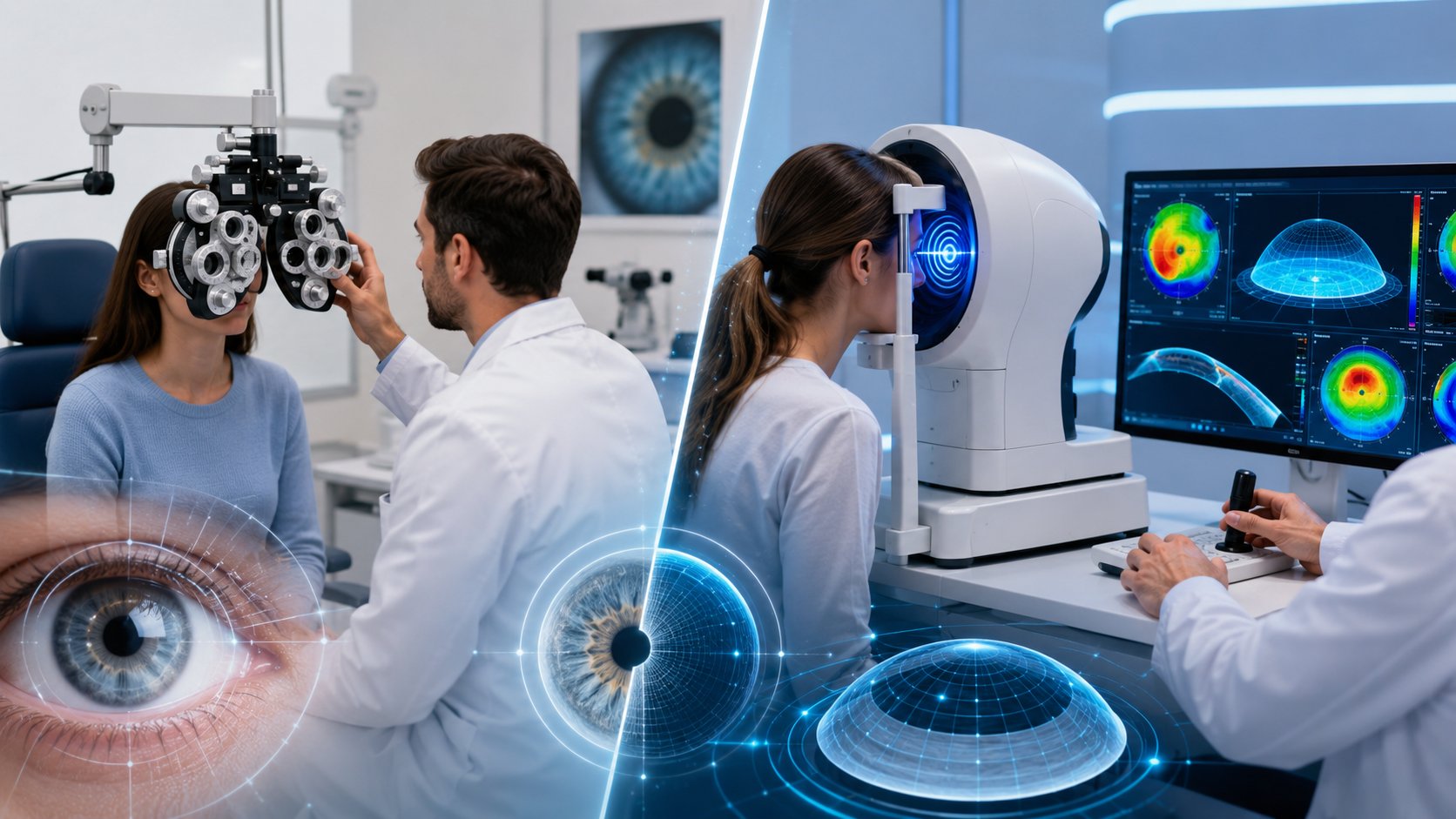
A standard eye test checks how well you see and looks for common eye conditions. A Pentacam test goes considerably deeper into the structure of the cornea itself.
| Feature | Standard Eye Test | Pentacam Eye Test |
|---|---|---|
| What it examines | Vision sharpness and basic eye health | A full 3D map of the cornea and anterior segment |
| Method | Charts, lights, and manual checks | Rotating Scheimpflug camera, no contact |
| Back surface of cornea | Not assessed | Measured in detail |
| Keratoconus detection | Limited | Detects early, subclinical cases |
| Use before surgery | General fitness only | Precise LASIK and cataract planning |
This depth of measurement is why the Pentacam is now considered standard before procedures such as Cataract Surgery in Mumbai, where accurate corneal data directly affects the final result.
Want a clear picture of your corneal health? Schedule your Pentacam assessment today. Book an Eye Test
Is the Pentacam Test Safe?
Yes, the Pentacam test is completely safe. It is a non-invasive scan that uses ordinary visible light instead of radiation, so there is no exposure risk even with repeated use. The camera never touches the surface of the eye, which rules out any chance of infection or injury. Because of this, the test is suitable for adults, children, and elderly patients alike, and it can be repeated as often as a doctor needs to monitor a corneal condition over time.
Why Choose Kenia Eye Hospital for Advanced Eye Diagnostics?
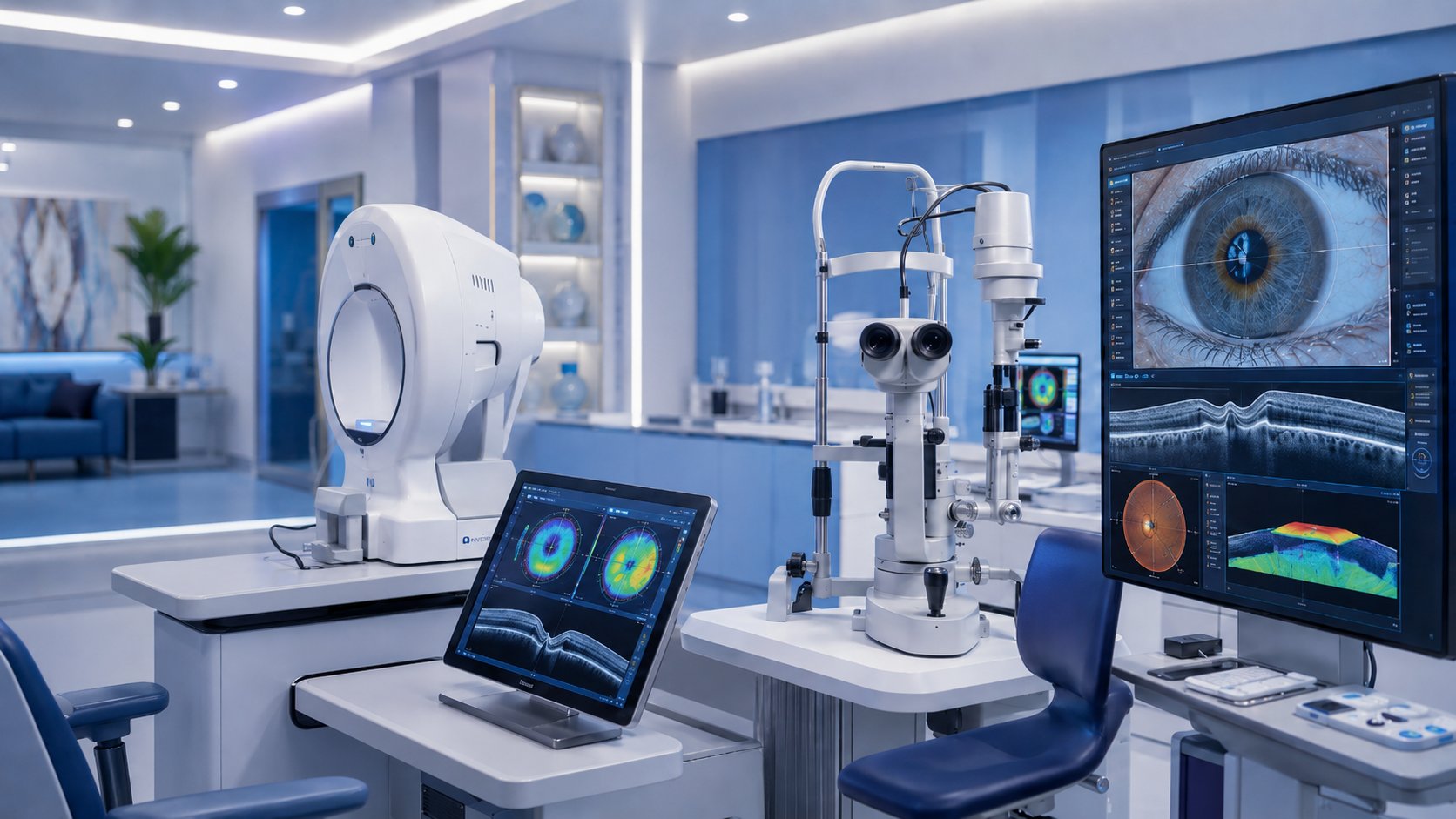
Accurate diagnosis depends on both the technology and the people interpreting the results. Kenia Eye Hospital combines a full stack of advanced diagnostic systems with 28 years of clinical experience in corneal, cataract, and refractive care.
Every Pentacam scan is reviewed by experienced ophthalmologists who use the findings to build a treatment plan suited to the individual eye. That standard of diagnosis and care is what places Kenia among the Best Eye Hospital in Mumbai choices for patients planning vision correction or cataract surgery.
Take the first step toward clearer vision with precise, expert diagnostics. Book an Eye Test or call +91 75064 99962.
