
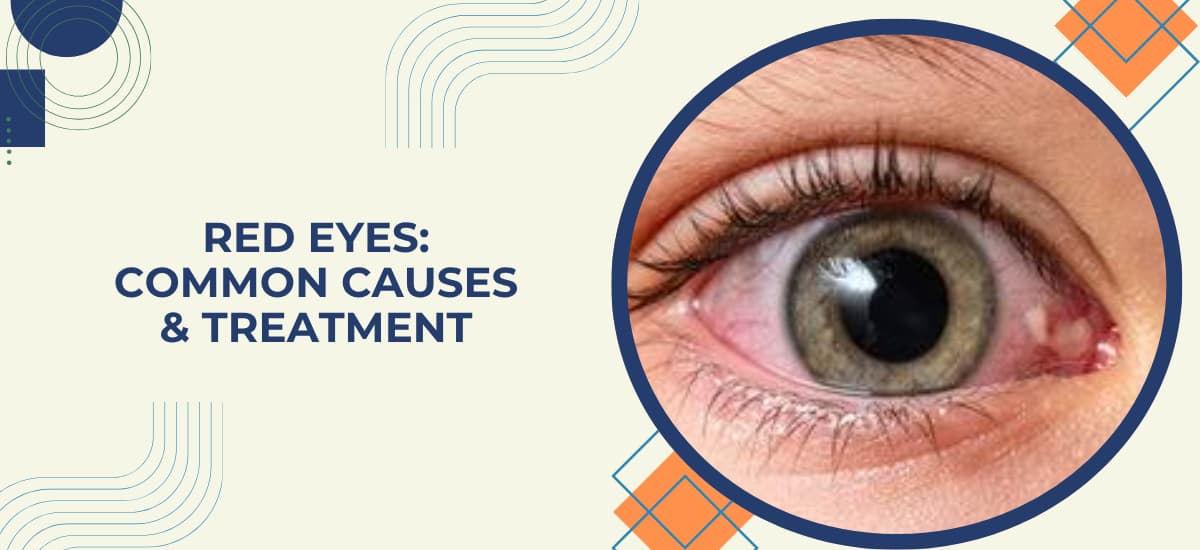
Red eyes, sometimes described as bloodshot eyes or eye redness, occur when blood vessels on the surface of the eye or beneath the eyelid become enlarged or irritated. Dry eye, allergies, conjunctivitis, digital eye strain, and contact lens irritation account for most cases, though less commonly the cause is more serious, such as acute glaucoma or a deeper eye infection. Because red eye treatment depends entirely on which of these is responsible, a red eye that persists or comes with pain warrants proper evaluation rather than over-the-counter drops used as a first response.
Redness that follows a late night, extended screen use, or brief allergen exposure is ordinary and typically clears on its own. A different picture emerges when redness is paired with pain, vision changes, or discharge, a combination that calls for assessment at an Eye Hospital in Mumbai rather than home remedies.
“I see red eyes quite often, and the cause is not always the same. Sometimes it is simply tiredness or irritation, while in other cases the eye needs attention fairly quickly. I usually look at whether there is pain, any change in vision, and which part of the eye is red before deciding what could be causing it.” — Dr. Vaishal Kenia, Chairman and Medical Director, Kenia Eye Hospital
What Causes Red Eyes?
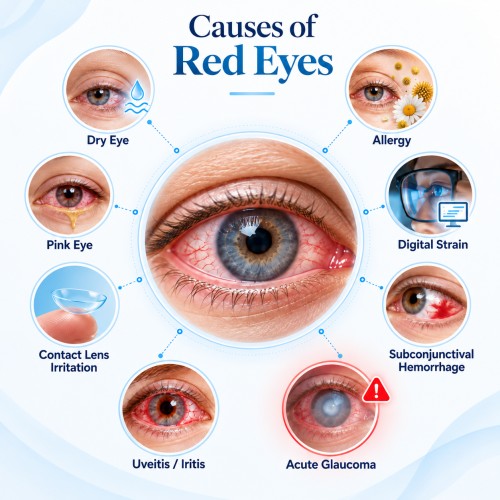
The causes of red eyes range from entirely harmless and temporary to conditions that call for prompt medical attention.
- Dry eye disease. An inadequate tear film leaves the eye surface irritated and visibly red, a pattern that tends to worsen toward the end of the day.
- Allergic conjunctivitis, triggered by pollen, dust, or pet dander, generally produces itchy red eyes and watery red eyes affecting both sides at once.
- Viral or bacterial conjunctivitis. Better known as pink eye, this typically brings discharge along with it, and its viral form spreads easily from person to person.
- Digital eye strain, in which extended screen use lowers the blink rate and leaves the eye surface dry and irritated.
- Contact lens irritation or infection, arising from poor lens hygiene or wearing lenses longer than recommended.
- Subconjunctival hemorrhage, a broken blood vessel beneath the conjunctiva that looks far more serious than it usually is, since it causes no pain.
- Uveitis or iritis, an inflammation inside the eye that produces deeper redness concentrated around the iris, along with pain and sensitivity to light.
- Acute angle-closure glaucoma, a sudden rise in eye pressure that brings redness together with severe pain, blurred vision, and halos around lights. This combination is a medical emergency.
Readers dealing with conjunctivitis specifically may find our guide on pink eye symptoms and treatment useful for distinguishing the viral and bacterial forms, while a sudden, painless red patch is covered in detail in our guide on broken blood vessels in the eye.
Not sure what's behind your red eye? A proper exam settles it quickly. Book an Appointment
What Symptoms Help Identify the Cause?
Red eyes symptoms vary considerably by cause. The specific pattern accompanying the redness usually points toward the underlying reason more reliably than the redness alone.
- Itching combined with watering in both eyes usually means allergies.
- Discharge, or redness that starts in one eye only, points toward conjunctivitis.
- Gritty discomfort that gets worse as the day goes on is a common sign of dry eye or digital eye strain.
- A bright red patch with no pain is characteristic of a subconjunctival hemorrhage.
- Deep pain alongside light sensitivity raises suspicion of uveitis.
- Halos, nausea, and severe pain together are warning signs of acute glaucoma. A painful red eye presenting this way requires emergency care rather than a scheduled visit.
Redness that fails to settle within a few days, or that appears alongside any of these signs, warrants an examination rather than continued observation at home.
Experiencing redness along with pain or blurred vision? Get it checked the same day. Book an Appointment or call +91 75064 99962
How Are Red Eyes Diagnosed?
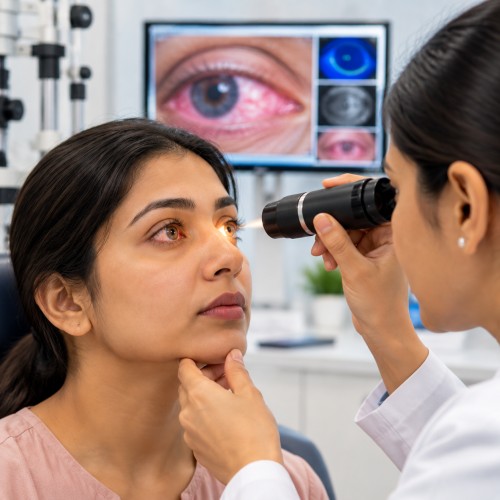
Diagnosis draws on the pattern of redness, the symptoms accompanying it, and a closer examination of the eye itself.
- Slit-lamp examination, used to assess the eye surface and how the redness is distributed.
- Fluorescein staining, which highlights corneal surface damage or the presence of a foreign body.
- Eye pressure measurement, carried out when glaucoma is a possibility.
- A detailed history, covering recent illness, allergen exposure, contact lens habits, and any injury.
In most cases, examination alone is sufficient to reach a diagnosis, without further testing.
How Are Red Eyes Treated?
Treatment addresses the underlying cause rather than the redness itself. The table below sets out the most common causes; uveitis and acute angle-closure glaucoma, being rarer and more urgent, are addressed separately under emergency signs rather than repeated here.
| Cause | Typical Treatment |
|---|---|
| Dry eye / digital strain | Lubricating drops, screen breaks, correcting refractive error |
| Allergic conjunctivitis | Antihistamine drops, avoiding triggers |
| Viral conjunctivitis | Supportive care, resolves in one to two weeks |
| Bacterial conjunctivitis | Antibiotic eye drops |
| Contact lens irritation/infection | Lens discontinuation, antimicrobial drops if infected |
| Subconjunctival hemorrhage | No treatment needed, resolves in one to two weeks |
For readers whose red eyes trace back to recurring dryness, our guide on dry eye disease sets out longer-term management options beyond drops.
How Can You Prevent Red Eyes?
A handful of consistent habits address most of the common causes before they start.
- Contact lens hygiene matters more than most people assume. Tap water, sleeping in lenses not approved for overnight wear, and overwearing lenses past their schedule are all avoidable triggers.
- Screen breaks, following the 20-20-20 rule of looking 20 feet away for 20 seconds every 20 minutes, reduce strain-related dryness considerably.
- Touching or rubbing the eyes should be avoided wherever possible, since it worsens irritation and spreads infection.
- Allergy management works best proactively. Antihistamine drops started before peak pollen season outperform those started after symptoms appear.
- Protective eyewear helps in dusty, windy, or high-pollution conditions, a recurring issue in Mumbai during certain months.
- Frequent handwashing, particularly before touching the eyes, remains the single most effective way to limit the spread of conjunctivitis.
Lens wearers can find more detail in our guide on contact lens–related eye infections.
Red Eyes in Children: What Parents Should Know
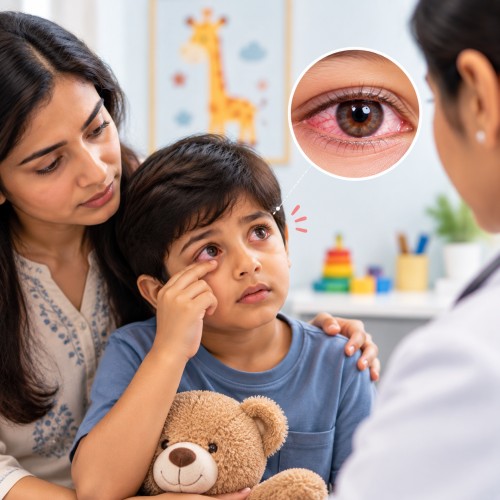
The causes behind red eyes in children largely mirror those in adults, though a few points are specific to younger patients.
- Viral conjunctivitis moves quickly through schools and daycare settings, since children touch their eyes and shared surfaces more often than adults.
- Allergic conjunctivitis is common among children who also have asthma or eczema, frequently flaring alongside those conditions.
- Redness in a newborn or infant should always be evaluated promptly, given that infants cannot describe what they are experiencing.
- Excessive eye rubbing, or a noticeable shift in behavior, can be how a child signals discomfort they have no other way to express.
- Children diagnosed with conjunctivitis are usually kept home until discharge clears, generally 24 to 48 hours into antibiotic treatment for the bacterial form.
Discouraging shared towels or pillows during an active infection reduces the chance of it spreading to siblings or classmates.
When Is a Red Eye an Emergency?
The majority of red eyes are not urgent, but a defined set of signs should never be left unaddressed.
- Severe eye pain, particularly alongside nausea or headache
- Sudden vision loss or significant blurring
- Halos appearing around lights
- Redness following a chemical splash or significant injury
- Redness in a newborn
Any of these warrants emergency evaluation rather than a routine appointment.
Why Choose Kenia Eye Hospital for Red Eye Evaluation?
Red eye spans a wide range of underlying conditions, and identifying the correct cause on the first visit prevents both unnecessary treatment and delayed care for something more serious. Kenia Eye Hospital brings more than 26 years of experience diagnosing the full spectrum of causes behind red eye, from routine dryness to emergencies such as acute glaucoma.
Patients also have access to 24x7 emergency eye care, relevant for the small proportion of red eye cases that genuinely cannot wait. This combination of broad diagnostic experience and round-the-clock access is part of what places Kenia among the best eye hospital in Mumbai choices for red eye evaluation.
Dealing with a red eye that isn't settling? Get a clear diagnosis rather than guessing. Book an Appointment or call +91 75064 99962
