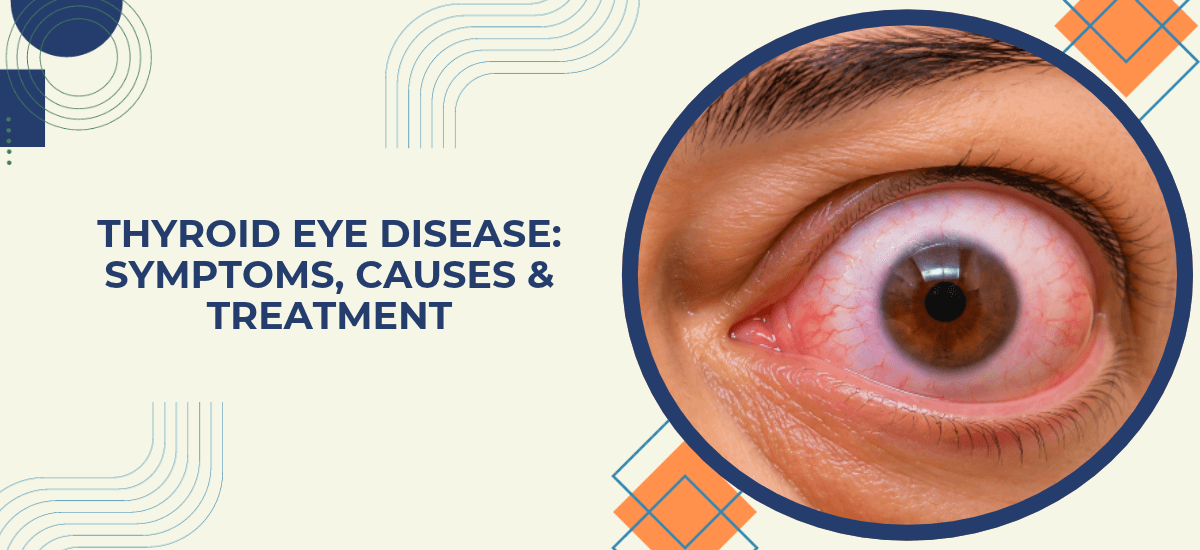
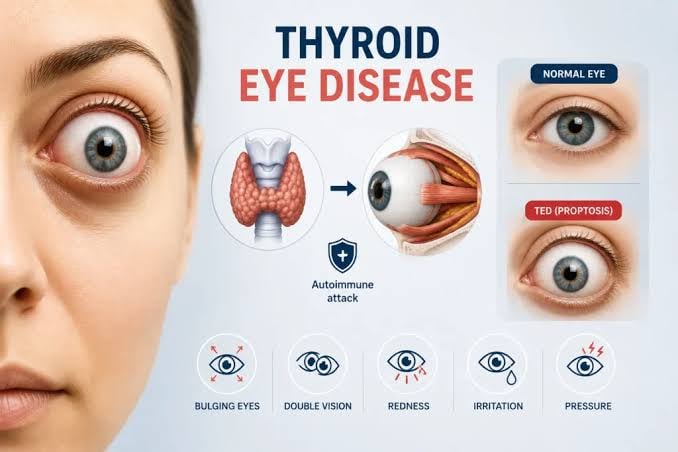
Thyroid eye disease is an autoimmune condition in which the immune system attacks the muscles and fat behind the eyes. The resulting swelling pushes the eyes forward and brings redness, dryness, a staring look and sometimes double vision. It is most often linked to Graves' disease and an overactive thyroid, though it can also appear with normal or underactive thyroid levels. Mild cases settle with eye care and thyroid control, while active or more severe disease needs treatment from an eye specialist and an endocrinologist working together.
Slightly gritty or dry eyes in someone with a thyroid condition are common and usually manageable. Bulging, a visible change in how the eyes look, double vision, or pain on moving the eyes is a different matter. That combination needs assessment at an Eye Hospital in Mumbai, because the early inflammatory phase is when treatment works best.
“Patients often tell me their eyes looked different in photographs long before anyone linked it to the thyroid. The inflammatory phase is the window in which we can do the most, so the earlier the eyes are examined, the more options we have. And controlling the thyroid does not always settle the eyes, which surprises many people.” — Dr. Vaishal Kenia, Chairman and Medical Director, Kenia Eye Hospital
What Is Thyroid Eye Disease?
Thyroid eye disease, also called Graves' eye disease or Graves' orbitopathy, develops when the immune system mistakes the tissue around the eyes for a threat. The eye muscles and the fat inside the eye socket become inflamed and swollen, and because the socket is a fixed bony space, the eyes are squeezed forward. The condition usually runs in two phases:
- The active phase brings the inflammation, with redness, swelling, pain and rapid change, and typically lasts between six months and two years.
- The inactive phase follows once the inflammation settles. Bulging, stiff muscles and eyelid changes may remain, but they stop getting worse.
Treatment priorities differ between the two, which is why the timing of an eye examination matters.
Noticed a change in how your eyes look, or have a thyroid condition and eye symptoms? Get them assessed early. Book an Appointment
What Are the Symptoms of Thyroid Eye Disease?
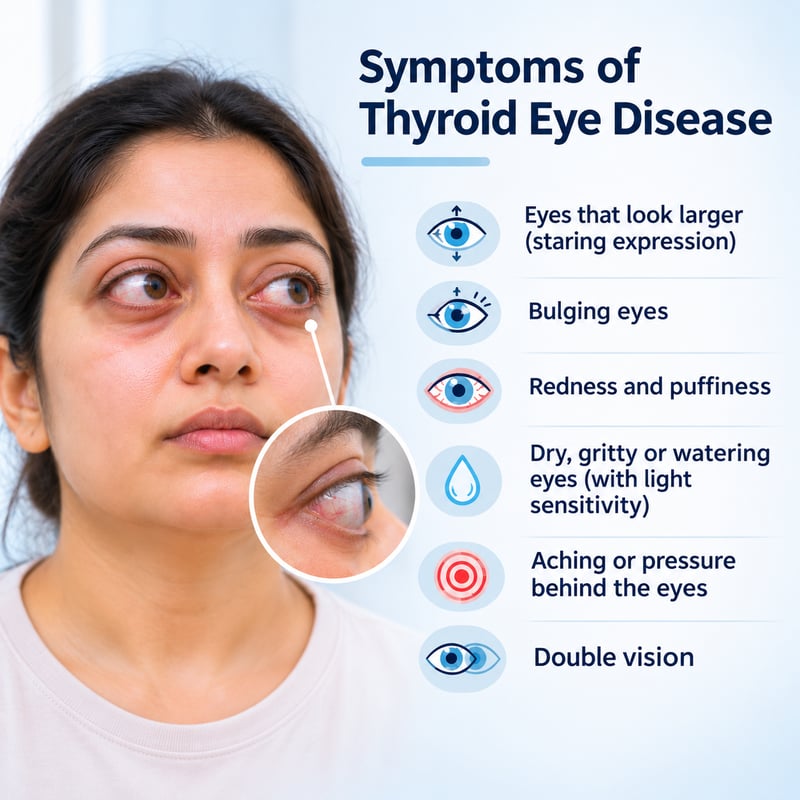
Thyroid eye disease symptoms often build gradually, and the eyes are not always affected equally.
- Eyes that look larger or give a staring expression, because the upper eyelid pulls back and shows white above the iris
- Bulging eyes (proptosis), pushed forward by swelling behind them
- Redness and puffiness of the eyelids and the white of the eye
- Gritty, dry or watering eyes, along with sensitivity to light
- A deep ache or pressure behind the eyes, often worse when looking up, down or sideways
- Double vision, usually in one direction of gaze, because the swollen eye muscles have become stiff
In advanced cases, pressure on the optic nerve can make colours look washed out and blur vision. Double vision from any cause is covered in our guide on diplopia causes and treatment.
What Causes Thyroid Eye Disease?
The root cause is autoimmune, but several factors decide who develops it and how severe it becomes.
- Graves' disease is the most common link, with eye changes appearing around the time thyroid overactivity is diagnosed, before it, or in the months after treatment begins.
- A smaller group have normal thyroid levels or an underactive thyroid, including Hashimoto's thyroiditis, so a normal thyroid test does not rule the condition out.
- Smoking is the strongest factor within a patient's control. It raises both the risk and the severity, and it makes treatment less effective.
- Wide swings in thyroid levels, and in some people radioactive iodine treatment, can trigger or worsen eye disease.
- Women develop it more often, although men and older adults tend to have more severe disease.
How Is Thyroid Eye Disease Diagnosed?
Diagnosis combines the eye findings with the thyroid history. A specialist will usually go through:
- an examination of the eyelids and eyes, with a measurement of how far the eyes protrude
- eye movement and alignment checks, which show how stiff the muscles have become
- vision, colour vision and visual field tests, to look for early optic nerve involvement
- thyroid function tests and thyroid antibody levels, ordered or reviewed with the endocrinologist
- a CT or MRI scan of the orbits when the picture is unclear or sight is at risk
Many patients also benefit from a check for dryness. Our guide on dry eye disease explains the surface problems that often come with it.
Thyroid Eye Disease Treatment: What Are the Options?
Treatment depends on how active the disease is and how severe it has become. Controlling the thyroid and stopping smoking help in every case.
| Situation | Typical Treatment |
|---|---|
| Mild, active disease | Lubricating drops and gels, cool compresses, sleeping with the head raised, sunglasses, selenium in selected patients |
| Moderate to severe, active disease | Intravenous steroids, or other immune-targeted treatment under specialist supervision |
| Double vision | Prism glasses while the disease settles, eye muscle surgery once it is stable |
| Bulging or eyelid retraction after the disease settles | Orbital decompression and eyelid surgery |
| Sight-threatening disease | Urgent steroids or emergency orbital decompression |
Rehabilitative surgery is normally carried out only after the disease has been stable for some months, and in a set order: orbital decompression first, then eye muscle surgery, then eyelid surgery. Kenia's oculoplastic surgery service handles the orbital and eyelid stages of this care.
Thyroid Eye Disease Warning Signs: When Is It Urgent?
Most patients have slow, manageable disease, but some features point to a threat to sight.
- A sudden drop or blurring of vision
- Colours that look faded or dim
- Severe pain in or behind the eye
- Eyelids that do not close fully, with a painful or cloudy surface on the eye
- New double vision appearing abruptly
Any of these calls for same-day evaluation.
Why Choose Kenia Eye Hospital for Thyroid Eye Disease?
Thyroid eye disease sits between ophthalmology and endocrinology, and the best results come when both sides are managed together. Kenia Eye Hospital has more than 26 years of experience in eye and eyelid care, covers the full range of oculoplastic procedures, and works alongside the patient's endocrinologist, which is part of why Kenia is counted among the best eye hospital in Mumbai choices for orbital and eyelid conditions.
Living with a thyroid condition and changes in your eyes? Book an evaluation. Book an Appointment or call +91 75064 99962
