
Amblyopia, commonly called lazy eye, is reduced vision in one eye, and occasionally both, that develops in childhood when the brain and the eye do not work together properly. The eye itself is usually healthy, but the brain has learned to favour the stronger eye and ignore the weaker one, so vision in that eye never develops fully. The most common causes are misaligned eyes, a large difference in prescription between the two eyes, or something blocking vision early in life, such as a childhood cataract. Treatment with glasses, patching or correction of the underlying cause works best when it starts early.
A child who sees well with one eye often has no idea anything is wrong, and the weaker eye can look completely normal from the outside. That is what makes amblyopia easy to miss, and it is why a vision check at an Eye Hospital in Mumbai should not wait for a complaint.
What Is Amblyopia (Lazy Eye)?
Vision is learned, not just inherited. In the first years of life the brain builds its connections with each eye, and it can only do so if both eyes send a clear, similar image. When one eye sends a blurred or misaligned picture, the brain relies on the other and the unused eye falls behind. The term lazy eye is slightly misleading, since the problem lies in how the brain processes the image, not in the eye itself. Two ideas are often confused:
- Amblyopia is the loss of vision in an eye that looks normal on examination.
- Squint, or strabismus, is a misalignment of the eyes, and it is one of the causes of amblyopia rather than the same thing.
Our guide on misalignment of the eyes explains squint in more detail.
Concerned about your child's vision? A paediatric eye examination can check both eyes properly. Book an Appointment
What Causes Amblyopia in Children?
Anything that stops the two eyes from sending an equally clear image to the brain can lead to amblyopia. There are four main routes.
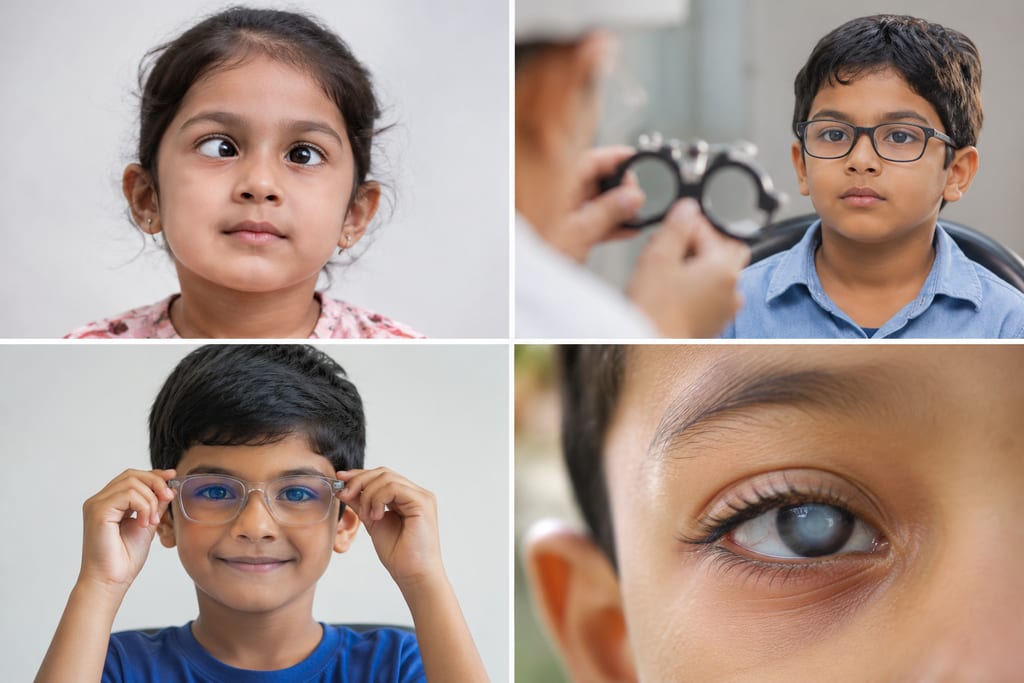
- Squint. When the eyes point in different directions, the brain suppresses the image from the turned eye to avoid double vision, and that eye gradually loses vision.
- A difference in prescription between the eyes, known as anisometropia. One eye may be much more long-sighted, short-sighted or astigmatic than the other, so the brain prefers the clearer image. This type is the easiest to miss.
- High prescription in both eyes can leave both images blurred, so neither eye develops full vision without glasses.
- Something blocking vision, such as a childhood cataract, a drooping eyelid covering the pupil, or a corneal scar. This form is usually the most severe and the most urgent. Our guide on cataracts in children covers one of the common causes.
What Are the Symptoms of Lazy Eye in Children?
Young children rarely say that one eye sees poorly, so the signs usually come from watching how they behave.
- Closing or covering one eye, especially in bright light or when concentrating
- Tilting the head, or holding objects very close
- Bumping into things on one side, or misjudging distances when reaching or climbing
- An eye that drifts inward or outward, even only occasionally
- Becoming upset when the stronger eye is covered, since the weaker eye cannot see as well
- Poor results on a school or paediatrician vision screening
Many children with amblyopia show none of these signs, which is why routine eye checks matter. Our guide on when a child should have a first eye checkup lists the key ages.
How Is Amblyopia Diagnosed?
Diagnosis rests on measuring vision in each eye separately and finding out why one is weaker. The examination usually includes:
- a vision test suited to the child's age, using pictures, symbols or letters, with one eye covered at a time
- a refraction after dilating drops, which gives the true prescription without the child's focusing muscles interfering
- a cover test and eye movement check for squint
- an examination of the front and back of the eye, to rule out a cataract or other structural cause
Because the cause decides the treatment, the aim is to answer two questions at the same visit: how weak is the eye, and why.
Amblyopia Treatment: How Is Lazy Eye Treated?
Treatment has two parts: remove whatever is blocking a clear image, then force the brain to use the weaker eye.
| Cause | Typical Treatment |
|---|---|
| Different or high prescription | Glasses worn full time, which alone can improve vision over a few months |
| Squint | Glasses and patching, with squint surgery if the eyes remain misaligned |
| Cataract or drooping eyelid | Surgery to clear the line of sight, followed by patching |
| Weak eye after glasses | Patching of the stronger eye, or atropine drops to blur it |
Patching of the stronger eye is prescribed for a set number of hours each day, and it works best when paired with close-up activities such as drawing, reading or building blocks, so that the weaker eye is actively used. Atropine drops in the stronger eye are an alternative for children who refuse a patch. Squint surgery corrects alignment but does not treat the weak vision on its own, so patching or glasses usually continue afterwards. Kenia's squint and paediatric clinic manages the full course of treatment.
Can Lazy Eye Be Corrected After Childhood?
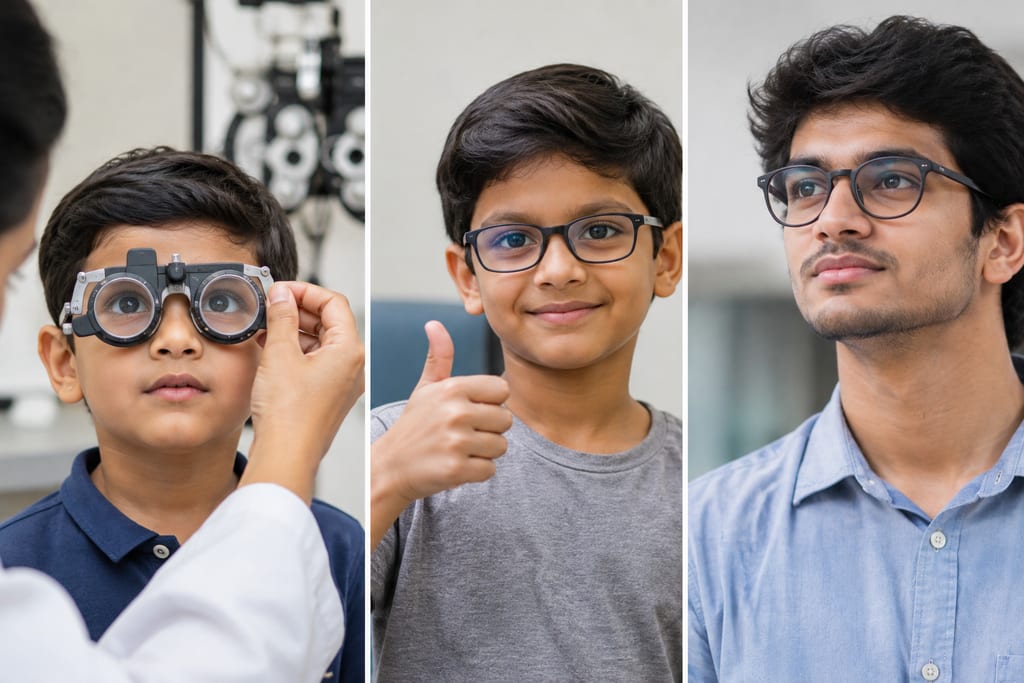
Treatment is most effective in early childhood, because the brain is still adapting, and the earlier it starts the better the result tends to be. Improvement is still possible in older children, and some gain is seen into the teenage years, though it comes more slowly and is often smaller. In adults, lazy eye is mostly managed by correcting the prescription and addressing any underlying problem, with more limited gains in vision. Any new loss of vision in an adult is a different matter and needs a full eye examination.
Paediatric Eye Care at Kenia Eye Hospital
Amblyopia requires accurate diagnosis, identification of the underlying cause and regular monitoring of visual development. Paediatric eye examinations may include vision assessment, refraction, eye alignment evaluation and examination of the internal structures of the eye.
Kenia Eye Hospital provides eye care services, including squint and paediatric eye evaluations. The appropriate examination and treatment plan depend on the child's age, visual development and underlying eye condition.
Is your child due for an eye check? Book an examination with a paediatric eye specialist. Book an Appointment or call +91 75064 99962
