
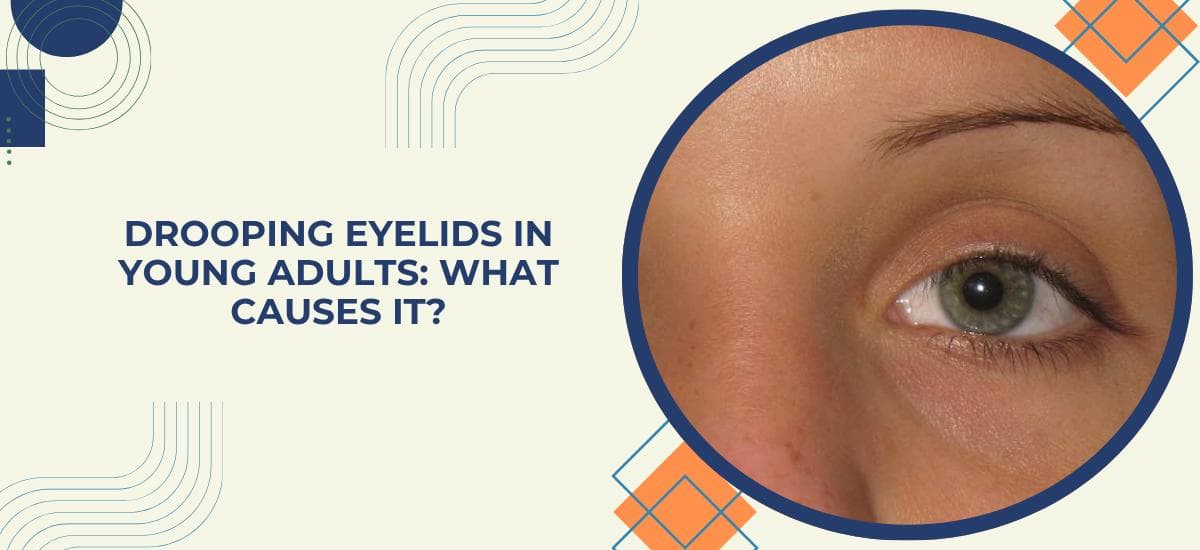
Ever spotted your life and wondered why one eye looks half shut? Or had a friend ask if you slept badly, again, when you slept perfectly fine? That could be a drooping eyelid. Drooping eyelids in young adults get brushed off all the time, because a heavy lid is supposed to be an older person's problem. It isn't always. Doctors call it ptosis, and in your twenties or thirties it mostly comes down to the lid muscle itself, how it was built, or how it's been treated over the years. Now and then it's a nerve or muscle problem, and that one needs checking.
Good news first. Most cases are harmless, and they can be fixed. The catch is knowing which kind you've got, since a lid that's been low since school is a different story from one that dropped last week. If it's covering your pupil, our oculoplastic surgery team can lift it. If it's been low since childhood, it may have dulled the sight in that eye, and that's the squint and pediatric clinic territory. Sort out ptosis in young adults early and you keep more choices open.
Dr. Vaishal Kenia, Chairman and Medical Director at Eye Hospital in Mumbai, says: "Think of the upper lid like a curtain on a rail. A small muscle, the elevator, pulls it up, and a nerve tells the muscle when to pull. If the curtain hangs low, either the muscle is weak, or the signal isn't getting through, or something heavy is sitting on it. Young people, nine times out of ten it's the muscle. The first thing I ask, though, is whether the lid looks the same at breakfast and at dinner. If it changes, I stop thinking about the lid and start thinking about the whole body."
What Causes Drooping Eyelids in Young Adults?
Born With It, Noticed Later
Of all the causes of drooping eyelids at this age, this is the big one. The levator muscle was a little weak from day one, just not enough for anyone to comment. Then you hit your twenties, lose a bit of baby fat, and suddenly it shows. Dig out some school photos. If the droop is there in every single one, that's your answer. In kids it can also blur sight, so the squint and pediatric clinic checks for a lazy eye too.
Contact Lenses, Eye Rubbing and Swelling
Years of contact lenses, hard ones especially, plus a rubbing habit, slowly stretch the thin tendon that anchors the lid muscle. Both lids sink a bit. People say their eyes look smaller than they used to. A swollen lid from allergy, a stye or a lump can fake it as well, though that one clears when the swelling does. And if you've worn lenses forever, get the eye surface checked while you're at it, because lens trouble sometimes ends up needing cornea treatment.
Muscle and Nerve Problems
Less common, but this is the group we take seriously. Myasthenia gravis, where nerves and muscles don't communicate properly, often announces itself through the eyelids. The tell is a lid that droops more by evening, or after hours on a screen, usually with double vision. Nerve damage, Horner syndrome or a third nerve palsy, can do it as well, sometimes with one pupil bigger than the other. Sudden droop plus double vision or a headache? Don't wait for a regular appointment. Come to our 24x7 emergency eye care desk.
Injury, Thyroid Disease and Lumps
A blow to the brow, an old surgery, even Botox that wandered where it shouldn't, any of these can leave a lid lower than before. Thyroid eye disease more often pulls lids up, but it can throw lid position off in odd ways too. Very rarely there's a growth on the lid or behind the eye pressing it down. These need a proper exam, sometimes a scan, and the oculoplastic team is who handles them.
How Are Drooping Eyelids Checked and Treated?
Starting With a Careful Look
We measure how high the lid sits and how far it travels when you look up and down. Then come the questions. When did it start? Does it change through the day? Ever see two of everything? Bring those old photos, seriously, they save us time. If myasthenia is on the list, a cold pack over the closed lid for a couple of minutes can be revealing, and bloods or a neurologist follow.
Treating the Cause First
When the droop is only a symptom, you fix the cause. A swelling gets treated. A Botox effect gets waited out. A nerve or muscle disease goes to the right specialist. Mild ptosis in young adults sometimes just gets watched, and there are lift drops and special crutch glasses that can help for a while, but they're a stopgap, not a cure.
Surgery When the Lid Covers the Pupil
For a lid that really sits low, surgery is the lasting answer. Which operation? That depends on how strong the muscle still is. Tighten a weak one, shorten a small hidden muscle for a mild droop, or, if the muscle is barely working, use a sling that lets your brow do the lifting. This is the oculoplastic surgery service, and Dr. Kruti Mody leads the oculoplasty and orbit work.
What Recovery Feels Like
Swelling and some bruising for a week or two. A tight feeling when you blink. You'll use drops and ointment, because for a few days the eye might not shut completely. Most people are back at work quickly, though the final lid height keeps settling over several weeks. Want to talk it through first? Book a consultation.
What Determines the Right Treatment Approach?
How Much of the Pupil the Lid Covers
A lid that's a millimetre low is mostly a looks thing. One that covers part of the pupil is different, you start tipping your head back or hoiking your brow just to see. That's usually when treatment makes sense, and a visual field analysis shows how much upper vision you're losing.
How Well the Lid Muscle Still Works
One number, called levator function, picks the operation. Good function, a simple tightening. Poor function, a different technique entirely. We measure it in the clinic in a couple of minutes.
Whether It's Steady or Comes and Goes
Same every day? Points to the muscle or tendon. Worse as the day goes on, or different morning to night? That points to a muscle and nerve condition, and fixing only the lid would miss the real problem.
One Eye or Both, and Any Other Symptoms
Both lids drooping evenly leans towards congenital or lens related causes. One eye, plus double vision, headache, a bigger pupil or an eye that's turned, changes the whole picture, and that gets sorted out urgently before anyone talks about surgery.
Key Takeaway
- At your age it's rarely about getting older. Nine times out of ten the lid muscle is just weak, or it's stretched out.
- Pull up a few photos from school or college. Droop in every one? Then you were most likely born with it.
- Lid gets heavier as the day goes on, or you're seeing double, or one pupil looks bigger than the other? Don't sit on it. And if it all came on suddenly, come in that same day.
- Once the lid starts blocking your view, surgery is what really fixes it, and which kind depends on how strong the muscle is. Ring us on +91 75064 99962 and we'll fix a time.
