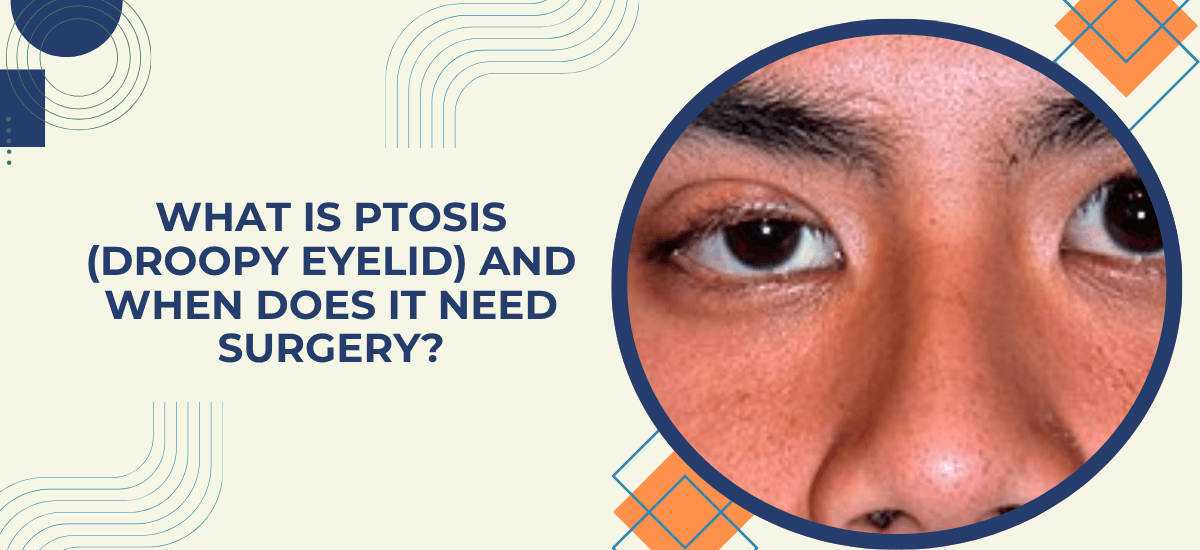
Ptosis is just the medical name for a droopy upper eyelid, and it happens when the levator muscle, the one whose whole job is holding the lid up, stretches out, weakens, or comes loose from the eyelid tissue it's attached to. It can show up in one eye or both, and the range is pretty wide, anywhere from a sag you'd barely notice in a photo to a droop severe enough to actually cover the pupil and block part of someone's vision. Some people are born with it because the muscle didn't develop the way it should. Others pick it up later in life from aging, nerve damage, an injury, or even as a side effect of a previous eye surgery.
Dr. Vaishal Kenia, Chairman and Medical Director at Eye Hospital in Mumbai, says: "A lot of adults come in thinking a droopy lid is just a cosmetic thing they've learned to live with, and sometimes that's fair. But when it's actually blocking vision, tilting the head back just to see properly becomes a habit, and that's a sign the muscle problem has gone past cosmetic. In kids it's a different conversation entirely, since an untreated droopy lid at a young age can actually mess with how their vision develops."
What Causes Ptosis, and What Are the Different Types?
Congenital ptosis shows up from birth, usually because the levator muscle didn't form or develop properly in the womb. It can affect one eye or both, and in kids this matters a lot more than it might seem, since a severely drooping lid can block visual development and lead to amblyopia if it's not addressed early. The squint and paediatric clinic handles these pediatric cases specifically.
Age related ptosis is the most common type doctors see in adults, and it happens gradually as the levator muscle's tendon naturally stretches or thins over the years. It's not usually linked to anything more serious, just wear and tear on a muscle that's been working since birth.
Ptosis after eye surgery catches a lot of people off guard. Procedures like cataract surgery can occasionally stretch or disturb the levator muscle during the process, leading to a temporary or sometimes lasting droop afterward.
Nerve damage or trauma related ptosis happens when something disrupts the nerve signal to the levator muscle itself, whether that's an injury, a stroke, or a nerve condition. This type sometimes comes with other symptoms too, so it usually needs a broader medical workup, not just an eye exam.
When Does Ptosis Actually Need Surgery?
Vision that's genuinely being blocked is the clearest signal surgery is worth considering. If the eyelid's drooping enough to cover part of the pupil, that's not a cosmetic issue anymore, it's an actual field of vision problem.
A head tilt or chin lift that's become a daily habit just to see properly is worth mentioning to a doctor, even if it feels like a minor adjustment. Compensating like this for months or years puts strain on the neck too, on top of not really fixing the underlying issue.
Children with congenital ptosis affecting one or both eyes often need earlier surgical evaluation than adults, purely because delayed treatment risks permanent vision problems from amblyopia. Timing matters a lot more in pediatric cases.
Surgical correction, when it's needed, usually falls under oculoplastic surgery, and the exact technique depends on how much the levator muscle itself is still functioning. Mild cases sometimes just get monitored rather than operated on right away, so it's genuinely a case by case call.
Why Choose Kenia Eye Hospital?
Kenia Eye Hospital has been treating patients in Santacruz (West), Mumbai since 1998, and ptosis cases, whether it's a newborn or someone noticing a droop later in life, get evaluated with the same care as any other eyelid concern. The oculoplastic team can tell how much of the droop is muscular versus something else entirely, which changes the treatment approach quite a bit.
NABH, QAI, and FEQH accredited. CGHS empanelled. Call +91 75064 99962 or book a consultation if a drooping eyelid, yours or your child's, has started affecting daily life.
