
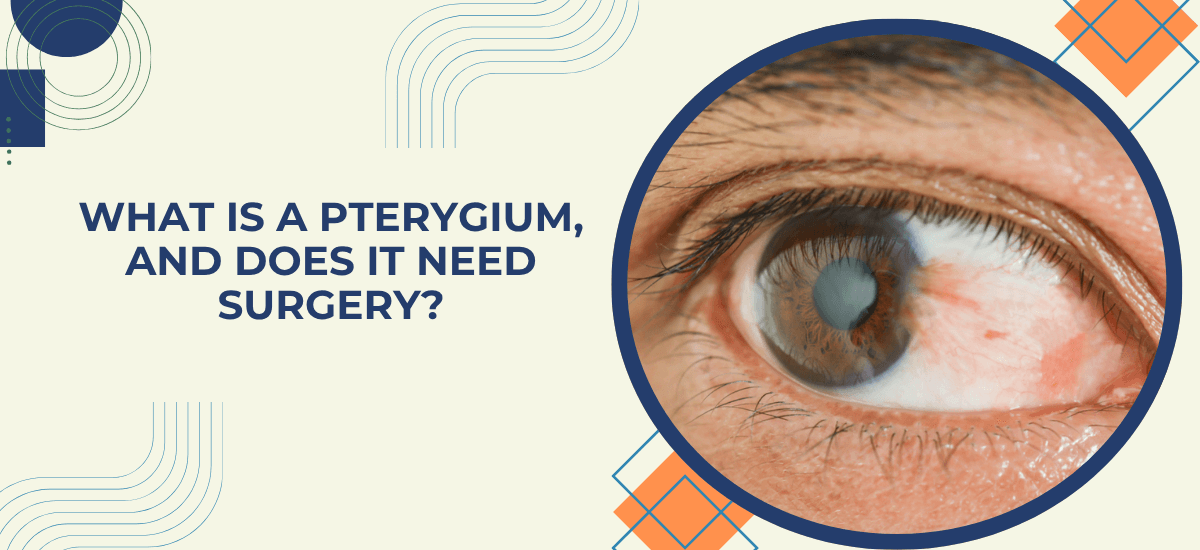
A pterygium, sometimes called surfer's eye, is basically a raised, wedge shaped patch of pink fleshy tissue that grows on the white part of your eye and can slowly creep across the cornea if it's left alone. It's not cancerous, so that part isn't the worry. What actually drives it is years of exposure to UV light, wind, and dust, which is exactly why the nickname stuck, since it shows up a lot in surfers, fishermen, farmers, basically anyone spending long hours outdoors without proper eye protection. Most people notice it as a small pinkish bump near the inner corner of the eye long before it becomes anything that actually threatens vision.
Dr. Vaishal Kenia, Chairman and Medical Director at Eye Hospital in Mumbai, says: "I see this a lot, honestly, in people who ride bikes to work every day for years without ever bothering with sunglasses. Most of the time it just sits there, causing some irritation, nothing dramatic. What actually flips the situation is when it starts creeping toward the center of the cornea. That's when it can start pulling on the eye's surface and messing with vision, and that's usually the point where surgery comes into the conversation."
What Causes a Pterygium, and What Does It Feel Like?
UV exposure over years is really the main driver here, and it adds up slowly, so no single sunny day is doing the damage, it's the accumulation. Anyone spending a lot of time outside without sunglasses, especially near water or sand where light bounces around more, is at higher risk.
Wind and dust matter too, honestly, and that's part of why it's so common among people riding bikes or scooters daily without any eye protection, which, let's be real, describes a huge chunk of Mumbai's commute. Constant dryness from wind seems to make the tissue more prone to growing this way.
Symptoms usually start out mild, redness, that annoying feeling like something's stuck in there, some irritation, occasionally blurred vision once the growth starts messing with the cornea's shape. A lot of people just chalk early symptoms up to dry eye or allergies and move on.
It grows slowly, over years typically, not overnight, so there's usually plenty of time to catch it before it becomes a real problem. Genetics and a history of eye irritation can also make someone more likely to develop one in the first place.
Does a Pterygium Actually Need Surgery?
Small ones that stay clear of the cornea's center often just get watched instead of operated on. Lubricating drops, sunglasses, regular checkups to track whether it's growing, that's usually enough for a while.
Once it starts heading toward the pupil though, that's typically what triggers surgery, since it can eventually block or warp vision if it keeps going. Cornea treatment here covers pterygium removal along with other corneal surface issues.
Bigger pterygiums can genuinely mess with the cornea's shape and cause induced astigmatism, and that's a real concern worth tracking. Pentacam HR imaging helps map exactly how much the curvature's actually being affected over time.
Removal itself is usually a pretty quick outpatient procedure. Modern techniques using a conjunctival autograft, basically a small graft of tissue from somewhere else in the eye, have cut down recurrence a lot compared to how things used to be done.
Why Choose Kenia Eye Hospital?
Kenia Eye Hospital's been in Santacruz (West), Mumbai since 1998, and pterygium cases get the same imaging depth as any other corneal issue that comes through the door. Pentacam HR mapping means the call on whether to operate isn't a guess, it's based on actually watching how the growth's affecting corneal shape over time.
NABH, QAI, and FEQH accredited. CGHS empanelled. Call +91 75064 99962 or book a consultation if there's a growth on your eye that seems to be getting bigger.
