
Eye cancer is rare. The floaters, the red eye, the twitching eyelid that sent you searching tonight are almost certainly something else. But the early signs of eye cancer are quiet, and that's the whole difficulty. Often there's nothing to feel, nothing to see, and it's picked up by chance during a routine eye exam. So the useful question isn't "do I have it", it's "what's worth getting checked, and how soon?" Anything inside the eye gets looked at by our retina clinic, and anything on or around the lids goes to the oculoplastic surgery team.
Dr. Vaishal Kenia, Chairman and Medical Director at Eye Hospital in Mumbai, says: "Most of the symptoms that worry people, floaters, a bloodshot eye, a blurry day, have nothing to do with cancer. I tell patients that straight away. But I also tell them why I never brush off a new dark spot or a one sided change in vision. Eye cancer is quiet early on. Nobody feels a thing. And the earlier we find it, the more options we have, and the better the chance of keeping the eye and the sight. So I don't ask anyone to panic. I ask them to get a proper dilated exam."
What Are the Early Signs of Eye Cancer?
Often Nothing at All
This is the awkward truth. Many small tumours inside the eye cause no symptoms, and they're found when someone goes in for new glasses or a diabetes check. That's why a dilated exam once in a while matters even when you see fine. Think of it as looking at the back of the eye, not just the chart on the wall. A routine check at our retina clinic can catch what you'd never notice.
Changes in Your Vision
When eye cancer symptoms do show up inside the eye, they look like lots of harmless things. Blurry vision in one eye. New floaters or flashes of light. A dark patch or shadow in your side vision. Part of your vision going missing. Because of that overlap, the rule is simple. A change that's only in one eye, and doesn't go away, should be examined. A visual field analysis can show which part of your vision is affected.
Changes You Can See
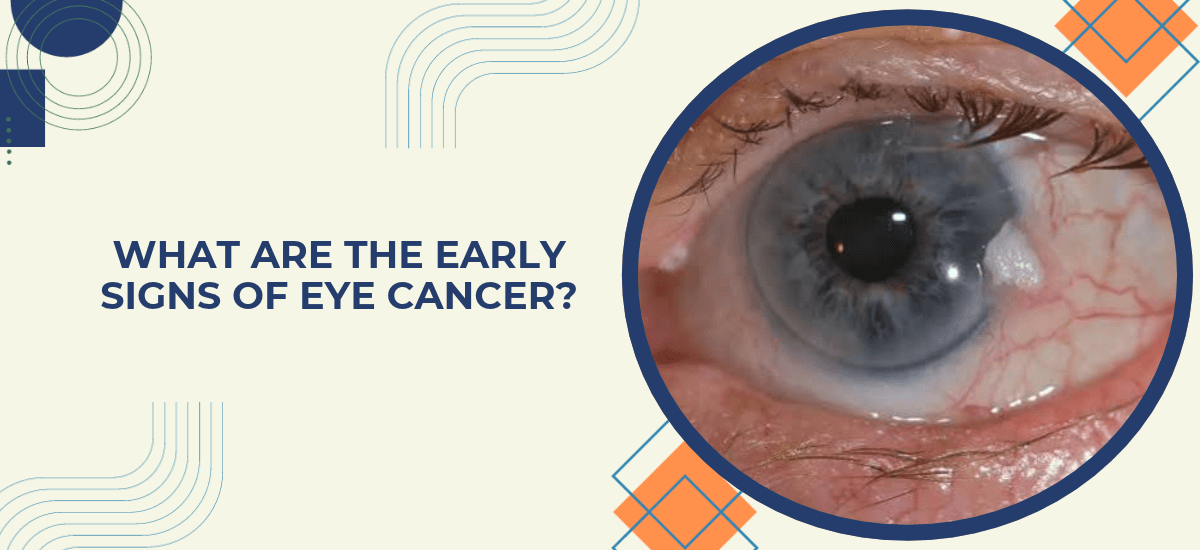
Some signs of eye cancer are visible to a mirror or a friend. A dark spot on the coloured part of the eye that is growing or changing. A pupil that's gone odd shaped. An eye that seems to be pushing forward. A red, irritated eye that won't settle with drops. On the lids, a painless lump, a sore that keeps bleeding and won't heal, or lashes disappearing from one patch. Lid and surface problems like these are looked at by our oculoplastic team.
Warning Signs in Children
In small children the eye cancer warning signs are different, and parents usually spot them first. A white or yellowish glow in the pupil in flash photos, where you'd normally see red eye. A new squint, or one eye drifting. A red, painful eye. If you see any of these, don't wait for the next routine visit. Our squint and pediatric clinic can check the back of the eye properly, and fast.
When Should You Get Your Eyes Checked?
Same Day if Vision Drops Suddenly
A sudden loss of vision, a shadow that appears over a few hours, or lots of new flashes and floaters, is not something to sit on, whatever the cause. It could be a detached retina or bleeding in the eye, and cancer is the less likely reason, but it all needs the same urgent look. Come to our 24x7 emergency eye care desk.
Within a Week for a New Spot or Lump
A dark spot on the iris, a bump on the lid, a patch on the white of the eye that wasn't there before. Not an emergency, but don't leave it for months. Take a clear photo with your phone in good light, so we can compare later, then book a consultation.
If You're at Higher Risk
Fair skin and light coloured eyes, lots of sun over the years, a family history of eye cancer, or moles on the body that are numerous, all raise the odds a bit. It doesn't mean you'll get it. It means a yearly dilated exam is sensible, and wide field imaging like OPTOS can see far out to the edges of the retina where small things hide.
If You've Had Cancer Elsewhere
Cancers of the breast, lung and some other organs can spread to the eye. If you've had one, and you notice any change in vision, mention it to your cancer doctor and get your eyes looked at promptly. The retina clinic can examine the back of the eye and report back to your team.
How Is Eye Cancer Diagnosed, and What Decides Treatment?
Looking Inside the Eye
It starts with drops to widen your pupils and a careful look at the retina and the layers beneath. An OCT scan shows the retina in fine slices, and OPTOS ultra-wide imaging takes a picture of almost the whole inner surface in one go. Those images also let us compare later and check whether a spot is growing.
Extra Tests When Needed
If something looks suspicious, there may be more. An ultrasound of the eye, a dye test like fundus fluorescein angiography to study the blood vessels, scans of the head and body, and sometimes a small biopsy. Not everyone needs all of them.
What Decides Treatment
Where the tumour is, how big, what type, and whether it has spread. Small ones can sometimes be treated with radiation plaques or lasers, bigger ones may need surgery, and children with retinoblastoma have their own specialised plan. Eye cancer treatment is specialist work, and if a tumour is found we'll plan the next steps with you and refer you to an ocular oncology centre.
Many Findings Aren't Cancer
Honestly, most dark spots turn out to be harmless freckles of the eye, called naevi, or old scars. We photograph them and watch for change. If nothing changes over months and years, it's a quiet finding and you carry on. A good reason not to panic, but to keep your follow up. Book a visit if you've been worrying.
