
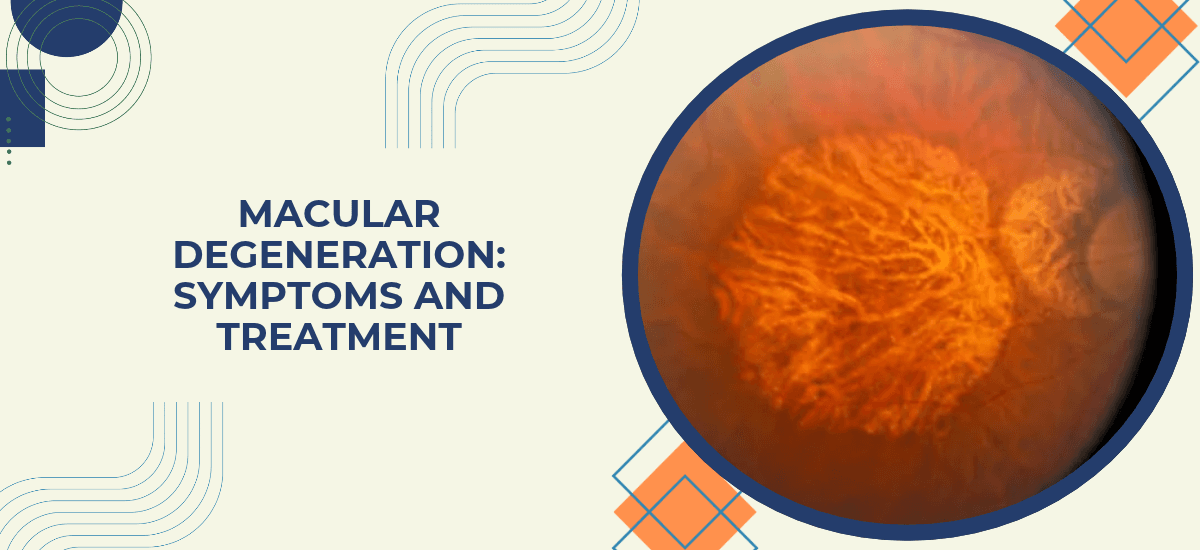
First it's the small print on a medicine strip. Then a door frame looks slightly bent, and there's a smudge sitting right where you're trying to look. The edges are fine, so you blame your glasses and put off doing anything. Plenty of people sit on this for months. What it can be is macular degeneration. The macula is that tiny spot in the middle of your retina, the bit you read with, drive with and recognise your grandchildren with. When it wears out, mostly with age (age-related macular degeneration, or AMD), the centre goes blurry while the sides stay normal. You won't go fully blind from it. And it can often be slowed down, more so when it's caught early. Our retina clinic looks at the macula closely with an OCT scan.
Dr. Vaishal Kenia, Chairman and Medical Director at Eye Hospital in Mumbai, says: "Think of the retina as the film at the back of a camera, and the macula as the sharpest spot in the middle of it. In AMD that spot slowly wears out. There are two kinds. Dry is the common one. It's slow, there's no pain, and you may notice nothing for years. Wet is less common, but it's the fast one, because fragile new blood vessels leak under the macula. Wet AMD can take away reading sight in weeks. So the most useful thing I tell patients is this. If straight lines suddenly look wavy, don't wait for your next appointment."
What Is Macular Degeneration, and What Causes It?
The Two Kinds, Dry and Wet
About nine in ten people have the dry type. Cells in the macula slowly thin out and break down. Wet AMD is the other one. New blood vessels grow where they shouldn't and leak fluid or blood, and the macula scars. Dry can turn into wet, sometimes quite suddenly. A dye test, fundus fluorescein angiography, shows us when that's happening.
Age, Smoking and Family
Age is the big one. Most people who get age-related macular degeneration are over fifty. Smoking is the biggest thing you can actually change, and it roughly doubles the risk. A parent or sibling with AMD raises your odds too. None of this means you'll get it. It means a yearly dilated check is a good idea, so book an eye test once you pass fifty.
Blood Pressure, Heart Health and Sun
The macula depends on a steady blood supply. High blood pressure, high cholesterol and a poor diet don't help. Years of strong sunlight without good sunglasses may add to it as well. What's good for your heart tends to be good for your macula. A wide field image with OPTOS lets us look at the retina's outer parts and its vessels in one go.
Drusen, the Early Clue
Often the first sign isn't something you feel. It's small yellow deposits under the retina, called drusen, that we see on examination. A few small ones are common with age and mostly harmless. Large or lots of them mean a higher risk, so we photograph and keep an eye on them. An OCT scan shows the layers where they sit.
What Are the Symptoms of Macular Degeneration?
A Blurry or Smudgy Centre
Early macular degeneration symptoms are easy to blame on something else. Reading gets harder. Faces look a bit blurry, and a smudge sits in the middle of what you're looking at. Because it's usually one eye first, and the other eye covers for it, people carry on for a long time. If you've never covered each eye separately, try it tonight. A visual field analysis can show what's missing.
Straight Lines Look Wavy
This is the classic one. A door frame, a tile line or a lamp post looks bent. Doctors use a grid of small squares, the Amsler grid, to test for it, and you can stick one on the fridge and check each eye separately once a week. If the lines bend, or any square goes missing, tell your retina clinic soon.
Colours Dull, Light Needed
Everything looks a bit washed out. You need a brighter lamp to read, and it takes longer for your eyes to adjust when you go from a bright room to a dark one. It's gradual, so most people just keep turning the light up. If that sounds like you, don't put it down to age alone. Get it checked.
A Dark or Blank Spot in the Middle
When the central spot goes dark or empty, it's usually later, or it's wet AMD that has moved fast. This one is urgent. Wet AMD treated within days does far better than wet AMD left for weeks. Come to our 24x7 emergency eye care desk, and don't wait for a regular slot.
What Determines the Right Treatment Approach?
Dry or Wet
This is the first question, and it changes everything. Dry AMD has no cure and no injection, and the focus is on slowing it. Wet AMD has proper treatment that can hold it back, and it's urgent. The type is worked out with an exam, OCT, and sometimes a dye test at the retina clinic.
How Far It Has Gone
Early AMD needs watching and healthy habits. Intermediate AMD may benefit from a special vitamin and mineral formula, the AREDS2 type, which has been shown to slow progression in people at higher risk. It isn't for everyone, so ask first. Advanced dry AMD mostly means low vision aids, like magnifiers and good lighting, to help you read and get around. Newer treatments for advanced dry AMD exist in some countries, so ask your doctor what's available here.
Injections for Wet AMD
The main macular degeneration treatment for the wet type is an anti-VEGF injection, a medicine that stops the leaky vessels growing. It goes into the eye, after numbing, and it's quick. It needs repeating every few weeks to months, and many people keep their sight or even get some back. The injections are planned through our retina clinic.
Daily Habits That Slow It Down
Stop smoking, and I mean it. Eat dark leafy greens and oily fish. Walk or do something active most days. Keep your blood pressure and cholesterol under control. Wear sunglasses outside. And have a dilated exam every year after fifty, or more often if your doctor says so. It sounds ordinary, and it works better than people expect. Book your yearly check.
Key Takeaway
- It's the middle of your sight that goes, never the edges, which is why people with AMD don't end up in total darkness.
- Smudgy centre, door frames that bend, a dark patch, washed out colours? Even in one eye, that's reason enough to get checked.
- Dry AMD you slow down with lifestyle changes, and some people take supplements too. Wet AMD is a different story. It needs injections, and the earlier the better.
- Lines suddenly going wavy? Don't wait, come within a few days. We're on +91 75064 99962.
