How Hyperopia affects Your Daily Life?
Are words on your phone getting harder to read? Do you feel eye strain or headaches after screen time, even when distance vision feels fine? Many people ignore these signs until work, driving, or reading becomes frustrating. That is why they search for hyperopia.
Hyperopia, also called farsightedness, makes near vision blurry and forces the eyes to work harder for close tasks. This can affect comfort, focus, and daily productivity. The good news is that most cases are easy to diagnose and treat with the right plan.
If you are searching for an eye hospital near me or an eye care hospital near me, this guide explains what hyperopia is, how it impacts daily life, and what to do next.
What Is Hyperopia?
Hyperopia is a focusing problem where close objects look blurry because light does not focus correctly on the retina. It is not an eye disease. It is a refractive error, and it can be corrected with glasses, contact lenses, or other options based on suitability.
People with hyperopia often see distant objects more clearly than near objects. Many also feel strain because the eyes keep trying to sharpen near vision.
How Does Hyperopia Affect Your Daily Life?
Hyperopia affects daily life by making near tasks tiring and uncomfortable.
The eyes work harder to focus, so you may feel strain even during simple activities.
Common presbyopia symptoms include:
- Reading books, labels, and small print.
- Using phones, tablets, and computers for long hours.
- Office work that needs constant screen focus.
- Hobbies like sewing, writing, or detailed craftwork.
- Driving at night if glare and strain increase.
When symptoms continue, people often search for an eye hospital in Mumbai or an eye hospital near meto get clarity.
What Are The Most Common Hyperopia Symptoms?
Hyperopia symptoms often show up during close work.
Catching them early helps prevent long term discomfort.
Common hyperopia symptoms include:
- Blurry vision for near objects.
- Eye strain after reading or screen time.
- Headaches after close work.
- Difficulty reading fine print.
- Squinting or rubbing the eyes often.
- Tired eyes even after short near tasks.
In children, hyperopia symptoms can look different. A child may avoid reading or lose focus in class. That is why parents often look for an eye care hospital near me for a proper check.
How Is Mild Hyperopia Different From Severe Hyperopia In Daily Tasks?
Mild and severe hyperopia affect routine life in different ways. The difference mainly shows in how quickly strain appears and how much near vision is affected.
| Mild Hyperopia |
Severe Hyperopia |
| Near tasks feel mostly manageable. |
Near tasks stay blurry often. |
| Strain shows after longer reading. |
Strain starts quickly. |
| Headaches are occasional. |
Headaches are frequent. |
| Glasses may not feel urgent. |
Correction is usually needed. |
| Symptoms progress slowly. |
Symptoms worsen faster. |
If you have constant blur or frequent headaches, it is a strong sign to visit an eye care hospital in Mumbai for evaluation.
What Is The Daily Life Impact Of Hyperopia On Work, Study, And Screens?
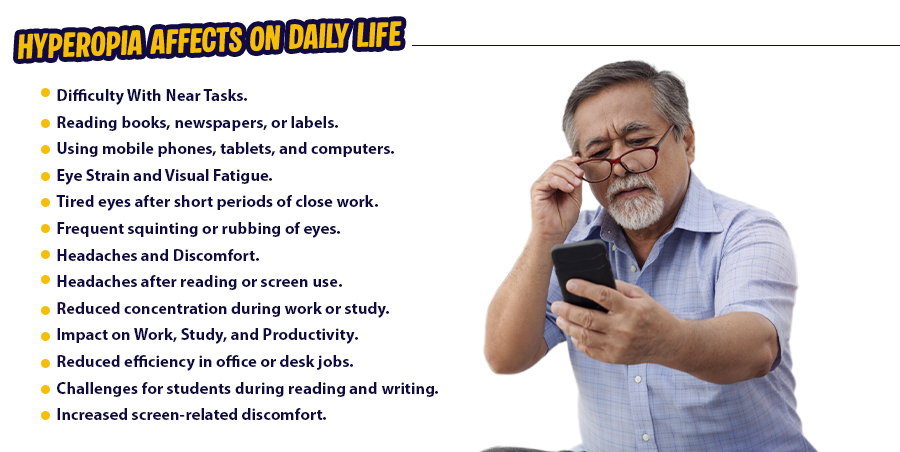
Hyperopia affects work and study mainly through strain and reduced focus. When near vision is not clear, concentration drops and tasks take longer. Common daily impacts include:
- Reduced comfort in desk jobs.
- Lower reading speed and more fatigue.
- More breaks needed during screen work.
- Headaches that interrupt productivity.
- Trouble staying focused in long meetings or classes.
Many adults look for the best eye hospital in Mumbai when these issues start affecting routine life.
How Does Hyperopia Affect Children’s Daily Activities?
Hyperopia can affect a child’s learning and confidence when it is not detected early.
Children may not realise their vision is blurry, so they may not report it clearly.
Signs and impacts in children include:
- Difficulty reading small text.
- Slower reading and lower understanding due to strain.
- Skipping lines or losing place while reading.
- Trouble copying from the board to the notebook.
- Avoiding books or near tasks.
- Headaches or eye pain after school.
- Risk of lazy eye or eye misalignment if untreated.
Regular eye checkups help catch these issues early, especially if you are searching for an eye hospital in Mumbai for a child’s evaluation.
What Are The Most Common Hyperopia Causes?
Hyperopia causes are usually related to eye shape and family history.
Understanding hyperopia causes helps doctors decide the right correction plan.
Common hyperopia causes include:
- Genetics: Family history increases risk.
- Eye structure: A shorter eyeball can prevent proper focus on the retina.
- Age related changes: After 40, focusing ability may reduce further.
- Health conditions: Diabetes can affect vision and focusing in some people.
Knowing the cause also helps decide if hyperopia is stable or changing over time.
What Are The Treatment Options And Hyperopia Advanced Treatment Choices?
Hyperopia treatment depends on your prescription, daily needs, and eye health. Most people start with lenses, and some explore long term options later.
- Eyeglasses Glasses are a common first step for clear near vision and comfort.
- Contact Lenses - Contacts can work well for people who prefer not wearing glasses. Hygiene and safe use matter.
- Refractive Surgery - Some people explore surgical correction after suitability.
- Orthokeratology - Special lenses worn overnight can temporarily reshape the cornea in selected cases.
If you are considering hyperopia advanced treatment, evaluation at a specialist-led centre matters. Many patients look for the best Eye Care Hospital in Mumbai when they want clear guidance and safe options. The same is true when comparing choices at the best eye care hospital in India for long term clarity.
Why Are Early Eye Examinations Important For Hyperopia?
Early eye exams prevent long term strain and missed symptoms, especially in children. They also help ensure your prescription stays accurate.
Regular eye exams help:
- Detect hyperopia early.
- Reduce headaches and eye strain.
- Improve reading and screen comfort.
- Prevent avoidable issues in children.
This is a common reason people search for an eye care hospital in Mumbai or an eye care hospital near me when symptoms start.
Book Your Eye Checkup At Kenia Eye Hospital In Mumbai!
Hyperopia can make near tasks uncomfortable and reduce focus in daily life. Hyperopia symptoms often include near blur, eye strain, and headaches after close work. Hyperopia causes are commonly linked to genetics and eye structure. With the right correction plan, most people manage it well and regain comfort quickly.
If near blur, strain, or headaches are becoming frequent, do not delay an eye exam. Kenia Eye Hospital supports clear diagnosis and personalised care for hyperopia. If you are searching for the best eye hospital in Mumbai or an eye hospital in Mumbai, book a consultation to understand your prescription and discuss hyperopia advanced treatment options if suitable.
And, if you’re searching for the best eye hospital near me, call us at 075064099962 now.
Frequently Asked Questions
What Are The Most Common Hyperopia Symptoms?
The most common hyperopia symptoms are blurry near vision, eye strain, and headaches after reading or screen use. Some people also need to hold reading material farther away for clarity.
What Are The Main Hyperopia Causes?
Hyperopia causes commonly include genetics and a shorter eyeball shape that affects focus. Age related focusing changes and conditions like diabetes can also contribute in some cases.
Can Hyperopia Get Worse If Left Untreated?
Yes, symptoms can worsen as strain increases and daily comfort reduces. In children, untreated hyperopia may raise the risk of lazy eye or eye misalignment.
What Are The Best Treatment Options For Hyperopia?
Glasses and contact lenses are common options for clear near vision. Hyperopia advanced treatment may include suitability based procedures like LASIK or PRK after clinical evaluation.
Can Lifestyle Changes Help In Hyperopia?
Lifestyle changes do not cure hyperopia, but they can reduce discomfort. Screen breaks, good lighting, and UV protection help lower strain.
Which Is A Trusted Eye Care Hospital In Mumbai For Hyperopia?
Kenia Eye Hospital is an eye care hospital in Mumbai where patients can get diagnosis, prescription guidance, and treatment planning. Many people also consider it when searching for the best eye hospital in Mumbai.