Peripheral Vision Loss Causes, Symptoms, and Treatment Options
If you keep bumping into people on one side, miss steps in dim light or feel less sure while driving, do not brush it off. Side vision loss starts silently. Many people notice it only after daily routines begin to feel harder. The main peripheral vision loss causes include glaucoma, retinal disease, optic nerve damage and some brain-related conditions. The right peripheral vision loss treatment depends on the exact cause, which is why early testing matters.
At Kenia Eye Hospital in Mumbai, specialists use visual field analysis, OCT, IOP checks and retina evaluation to identify the reason behind vision loss and guide the next step. Kenia Eye Hospital is a multisuper-speciality eye hospital in Santacruz (W). It offers complete eye care under one roof, advanced diagnostics and specialist retina and glaucoma services. Read further to understand the warning signs, causes and treatment path clearly.
What Is Peripheral Vision Loss And Why Is It Important For Daily Vision?
Peripheral vision helps you notice movement and objects outside the centre of your sight. When this side vision starts reducing, many people describe it as tunnel vision.
This change can affect everyday tasks such as:
- Walking through crowded spaces.
- Using stairs safely.
- Driving in traffic.
- Noticing people or objects from the side.
Many patients do not spot the problem early. They realise it when daily movement feels less natural or less safe. A visual field test helps map how much side vision has changed because it measures both central and peripheral vision in each eye.
What Are The Early And Common Peripheral Vision Loss Symptoms?
The early peripheral vision loss symptoms feel small at first, but they can affect your routine and safety adversely in the long run.
Common signs include:
- Bumping into objects on one side.
- Missing people walking beside you.
- Trouble driving in traffic or at night.
- Difficulty using stairs in dim light.
- Turning your head more to scan the room.
- Missing movement from the side.
The visual field testing can detect blind spots or subtle changes in peripheral vision that may suggest early optic nerve damage.
If a retinal problem causes the change, you may also notice flashes, eye floaters or a shadow from the side. If this is the case with you or your loved one, know that this condition requires urgent medical intervention.
What Symptoms Suggest The Vision Loss Is Getting Worse?
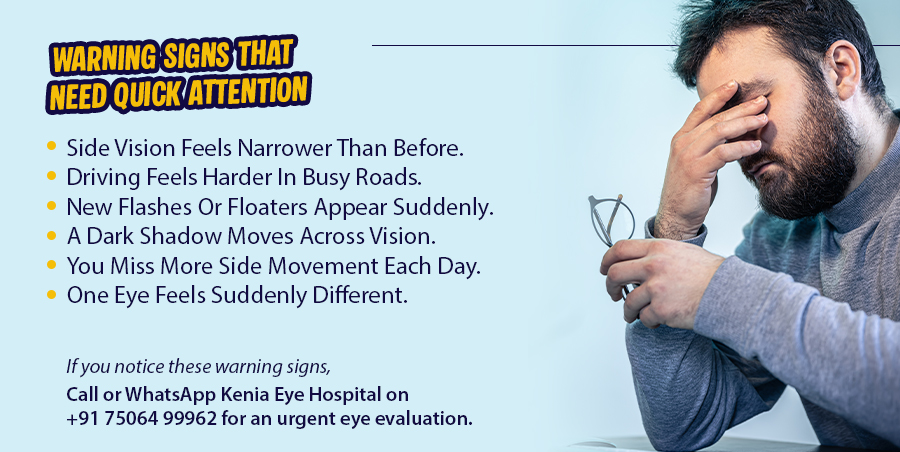
These warning signs matter because sudden change can point to retinal detachment, acute pressure rise or another eye problem which might be urgent.
What Are The Most Common Peripheral Vision Loss Causes?
The most important peripheral vision loss causes include glaucoma, retinal detachment, retinitis pigmentosa, diabetic retinal disease, optic neuritis and stroke or brain injury. Some conditions reduce side vision slowly. Others can affect your vision within hours or even days.
| Condition |
How It Affects Peripheral Vision |
| Glaucoma |
Damages the optic nerve and slowly narrows side vision |
| Retinal detachment |
Pulls the retina away and can cause sudden field loss |
| Retinitis pigmentosa |
Starts with night vision trouble and later causes tunnel vision |
| Diabetic retinal disease |
Damages retinal blood vessels and can affect the visual field |
| Optic neuritis |
Inflames the optic nerve and disrupts visual signals |
| Stroke or brain injury |
Affects the visual pathway and reduces part of the field |
Experts at Kenia explain that increased eye pressure can damage the optic nerve and slowly reduce peripheral vision if doctors do not treat it.
Kenia’s retina clinic explains that retinitis pigmentosa starts with reduced night vision and loss of peripheral vision. It also highlights retinal detachment and diabetic retinopathy as major retinal problems that need specialist care.
This is why self-diagnosis goes wrong. Two people may both say, “I am losing side vision,” but one may have glaucoma while another may have a retinal problem.
When Is Peripheral Vision Loss A Medical Emergency?
Sudden side vision loss is a medical warning sign. It should not wait for a routine visit next week.
Seek urgent eye care if you notice:
- Sudden loss of side vision.
- Flashes of light with floaters.
- A curtain or shadow from the side.
- Severe eye pain with blurred sight.
- Fast worsening over hours.
- Vision change after a head injury.
Kenia Eye Hospital’s retinal pages describe flashes, floaters and a curtain-like shadow as warning signs of retinal detachment. Its glaucoma pages explain that vision loss can also result from optic nerve damage caused by pressure inside the eye.
If you are searching for the best eye surgery hospital in India because vision changed suddenly, the most useful step is urgent diagnosis with the right specialist team, not delay.
How Do Eye Specialists Diagnose Peripheral Vision Loss?
Doctors diagnose side vision loss by combining your symptom history with tests that show what part of the eye or visual pathway has changed. Kenia Eye Hospital offers visual field analysis to map central and peripheral vision, and it also uses OCT, IOP checks and detailed retina evaluation as part of specialist eye care.
| Test |
Purpose |
| Visual field test |
Maps areas of side vision loss |
| Automated perimetry |
Measures how well you detect light across the field |
| OCT scan |
Shows optic nerve and retinal layer changes |
| Eye pressure test |
Checks glaucoma risk and pressure control |
| Dilated retina exam |
Detects tears, detachment and retinal disease |
Kenia’s doctors state that a visual field test measures side vision and helps identify vision loss that may suggest glaucoma. A dilated eye exam helps doctors examine the optic nerve for damage.
This step-by-step diagnosis matters because treatment only works well when doctors identify the real cause. That is also why many patients prefer an eye specialist in Mumbai who can arrange glaucoma testing and retina evaluation in one place.
Peripheral Vision Loss Treatment Options
The right peripheral vision loss treatment depends on what causes the vision loss. Doctors do not use one single treatment for every patient. They match the treatment to the disease process.
Common treatment approaches include:
- Eye drops to lower pressure in glaucoma
- Laser treatment for selected retinal problems
- Retinal surgery such as vitrectomy when needed
- Treatment for diabetic eye disease
- Follow-up with visual field tests and OCT
- Vision support when lost field does not return
Kenia Eye Hospital’s glaucoma clinic focuses on early detection and management to prevent further vision loss. Its broader eye care pages also highlight advanced surgical and laser treatment for glaucoma.
Kenia’s retina clinic and service pages also highlight retinal lasers, OCT imaging and specialist care for diabetic retinopathy, macular degeneration, retinal tears and retinal detachment.
This is why early diagnosis changes outcomes. In some cases, treatment can protect the remaining field of vision. In emergency retinal cases, quick treatment can make a major difference.
What Happens If Peripheral Vision Loss Is Left Untreated?
Untreated side vision loss can change how you live. People start avoiding night travel, crowded roads and unfamiliar spaces because they do not feel sure of what they can detect around them.
With glaucoma, untreated pressure can keep damaging the optic nerve and continue narrowing peripheral vision. Several accounts of such ignorance clearly state that untreated glaucoma can eventually lead to permanent blindness.
With a retinal tear or retinal detachment, delay can increase the risk of lasting vision damage. Kenia’s retina clinic notes that a retinal tear can become retinal detachment if doctors do not treat it quickly.
If you have ignored symptoms for weeks or months, a full evaluation is still worth doing. The goal is to find out what remains treatable and how to protect the vision you still have.
Why Choose Kenia Eye Hospital For Peripheral Vision Loss Evaluation And Treatment?
Side vision loss begins with small problems that people dismiss. A missed step, a side bump or trouble in low light may look minor, but these signs can point to glaucoma, retinal disease or optic nerve damage. Kenia Eye Hospital in Santacruz (W), Mumbai offers specialist glaucoma care, retina care, visual field analysis, OCT and advanced diagnostics under one roof. The hospital is also NABH accredited and positions itself around comprehensive and affordable eye care with advanced technology.
If you are noticing these symptoms and want clear answers with the right treatment path, call or WhatsApp Kenia Eye Hospital on +91 75064 99962 today.
Frequently Asked Questions
Can glaucoma cause peripheral vision loss without any pain?
Yes, it can. Glaucoma often reduces side vision slowly, so many people do not notice it until the loss becomes more serious.
Is peripheral vision loss always permanent?
Not always. Some cases can improve with timely treatment, while others need early care to stop further vision loss.
What is the first test for peripheral vision loss?
Doctors usually start with a visual field test. They may also advise OCT, eye pressure checks and a retina exam based on your symptoms.
When should I see an eye specialist for side vision loss?
See an eye specialist as soon as you notice side vision changes. Go urgently if you also have flashes, floaters or a shadow in your vision.
Can retinal problems also cause tunnel vision?
Yes, they can. Some retinal conditions can reduce side vision and may need urgent treatment to protect your eyesight.