LASIK for Defence Aspirants: What You Must Know Before Applying for Army, Navy & Airforce!

Many students train for years for a life in uniform. They run every day, prepare for written exams, and work on discipline and confidence. Yet a small eye power like -2.00 or -3.00 can suddenly become the biggest roadblock. That is why LASIK for Defence Aspirants has become such an important topic.
Every year, many candidates are stopped at the medical stage. Some fail because their eye power is outside the limit. Some cannot clear the colour vision test. Others have had laser surgery, but do not meet the rules for Lasik Surgery for Army People and other defence roles.
This blog explains how Lasik Surgery for Army Navy and Air Force aspirants fits into current medical rules. You will understand what type of laser eye surgery is usually accepted, “Is LASIK allowed in Army” and how to plan your timing before SSB and final medicals.
Everything One Must Know About LASIK for Defence Aspirants
Before choosing LASIK know how it affects eligibility, medical tests, and final selection:
Is LASIK Allowed in the Army, Navy, and Air Force?
Different wings have different rules. The acceptance also depends on the type of LASIK you undergo and how healthy your eyes are after surgery.
In general:
- LASIK is accepted for many ground duty and non-flying roles.
- Flying branches and special forces often have stricter or separate rules.
- Each force keeps limits on how high your eye power was before surgery.
- There are also limits on cylindrical power and difference between both eyes.
- Only certain laser methods are considered suitable for defence use.
- Healing must be complete and vision must be stable before your medical tests.
So, if you are asking “Is LASIK allowed in Army?”, the simple answer is: yes, it is allowed for some roles, but only within official medical rules. The same applies to many Navy and Air Force posts.
These rules can change with time. Before you plan for LASIK, always read the latest official notification and medical standards for the exact exam or entry you are targeting.
Why Defence Aspirants Consider LASIK?
Eye power becomes a barrier during medical selection. Aspirants choose LASIK because:
- It removes dependence on glasses and contact lenses.
- It helps meet the vision standards required for many roles.
- It improves comfort and clarity during training and field tasks.
- It gives confidence during physical and group activities.
What Type of LASIK Is Accepted for Defence Roles?
Defence medical boards prefer procedures that give maximum stability. The commonly accepted options include:
- Wavefront-Optimised LASIK: Gives sharp vision and smooth eye surface.
- Custom or Contour-Based LASIK: Treats tiny imperfections in your vision pattern.
- FemtoLASIK (Blade Free): Uses a laser instead of a blade which adds precision.
We use these advanced methods forlasik surgery in Mumbai for young, active patients, including those preparing for defence services.
Minimum Requirements You Must Meet Before LASIK
Before undergoing surgery, defence aspirants must be evaluated carefully. Basic checks include:
- Stable eye power for at least 1 year.
- Healthy cornea with good thickness.
- No history of serious eye injury or disease.
- No autoimmune or uncontrolled health conditions like diabetes.
- Minimum 18 years of age.
Very high minus powers can still lead to rejection after surgery, even if your current vision seems normal. Always discuss this openly with your doctor. A proper pre-LASIK evaluation makes the surgery safer and improves your chances of passing defence medical tests.
What to Expect During the LASIK Procedure
LASIK is simple, quick and most procedures take 10-15 minutes for both eyes. It is painless for most patients. General steps include:
- A detailed eye scan.
- Numbing eye drops
- Laser correction
- Short rest after the procedure.
At Kenia Eye Hospital, we perform best lasik eye surgery in Mumbai with detailed pre-checks and careful post-surgery guidance so patients feel safe, supported and fully informed throughout the process. Recovery Tips for Defence Aspirants
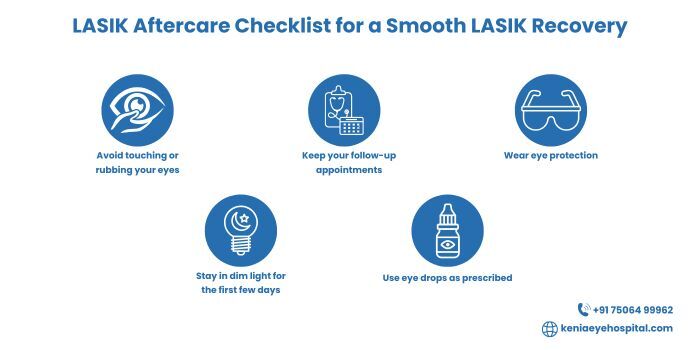
Recovery plays a very important role for candidates preparing for the Army, Navy, or Air Force. Follow these steps after the procedure:
- Use eye drops as exactly as advised.
- Do not rub or press your eyes.
- Avoid dust, smoke, and dirty water for a few days
- Limit heavy workouts during initial recovery.
- Attend all follow-up visits on time.
- Keep proof of your surgery and reports for future medical tests.
Very important: do not hide your LASIK history during defence medicals. Hiding surgery can lead to permanent disqualification. Clean reports and honest disclosure are always safer.
How Long Before Medical Tests Should You Get LASIK?
It is important to plan your surgery early. Defence boards prefer that your eyes are fully stable before appearing for medical evaluations.
Most eye experts suggest:
- Minimum 6 months gap before medical selection.
- Longer gap if your power was high previously.
- Complete documentation from your surgeon.
This gap allows your eyes to heal, lets your power settle, and gives you time to repeat tests if needed before facing the final defence medical board.
Benefits of LASIK for Defence Aspirants
When done at the right time, with the right method by the best LASIK surgeon in Mumbai it can make life easier for aspirants:
- Clear vision without glasses.
- No restriction during physical training.
- Better depth and distance judgement in the field.
- Good low-light clarity.
- Comfort while wearing helmets, goggles, and protective gear.
- Higher confidence in group tasks and obstacle courses.
This is why many serious candidates looking for lasik eye surgery in Mumbai, come to Kenia Eye Hospital, where we perform defence-focused LASIK with detailed scans, strict corneal safety checks and clear documentation required for Army, Navy and Airforce medicals.
Contact Kenia Eye Hospital for Defence-Focused LASIK Evaluation
If you are searching for lasik eye surgery near me and need a centre that understands defence medical standards, at Kenia Eye Hospital in Santacruz we offer a complete, defence-ready evaluation process. We perform LASIK surgery in Santacruz, along with PRK, Contoura and other laser vision correction procedures, and we regularly work with young candidates preparing for Army, Navy and Airforce selections.
We help you choose the safest procedure based on Army, Navy or Airforce rules. Our team ensures every candidate gets complete surgery documentation, follow-up notes, and a clear understanding of medical fitness.
Book your defence-focused LASIK evaluation at Kenia Eye Hospital. Let an expert guide your decision before you apply for Army, Navy or Airforce roles.
FAQs
Is LASIK allowed in Army, Navy and Airforce?
Yes, LASIK is allowed in some roles with strict conditions. It is restricted or not allowed for flying and special forces roles.
Can I join NDA after LASIK?
No, NDA does not allow candidates who have undergone refractive surgery because the age criteria conflict with eye development.
How long should I wait after LASIK before SSB?
You must wait at least 6-12 months and show stable vision and complete eye health documentation.
Is PRK better than LASIK for defence?
PRK is often preferred for aviation and high-impact roles because it does not create a corneal flap. Suitability varies by branch.
Can poor documentation cause rejection even if my vision is perfect?
Yes, missing reports, incomplete operative notes or lack of stability proof can lead to medical rejection.