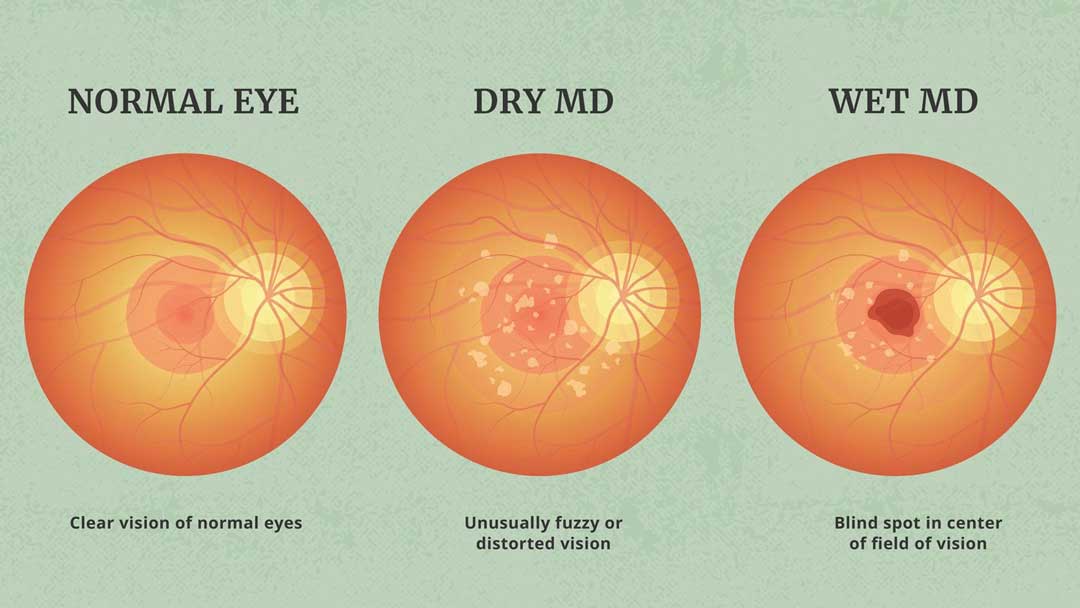
Macula and Central Vision Care
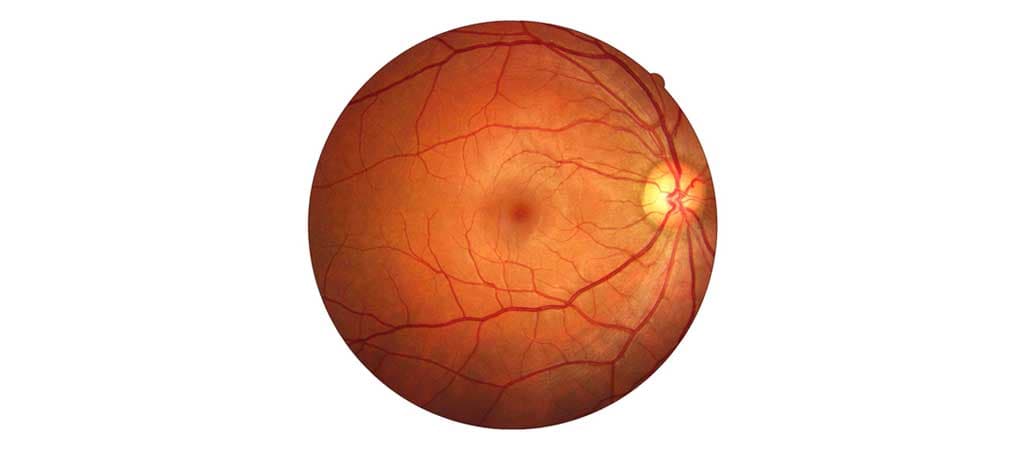
Age-related macular degeneration affects the macula, the part of the retina responsible for sharp central vision.
Age-related macular degeneration, also called AMD, affects the macula. The macula is the central part of the retina and helps with reading, recognizing faces, driving, and seeing fine detail.
AMD usually affects central vision. Peripheral vision is commonly preserved, so AMD does not usually cause complete blindness, but loss of central detail can still affect daily life significantly.
Dry AMD is the more common form. It tends to progress slowly as the macula thins with age. Some patients notice dimmer vision, difficulty reading, or trouble seeing clearly in low light.
Wet AMD is less common but can progress faster. Abnormal blood vessels grow under the retina and may leak fluid or blood, creating distortion or a blind spot in central vision.
Treatment depends on AMD type and stage. Selected patients with intermediate AMD may benefit from nutritional guidance. Wet AMD may be treated with intravitreal anti-VEGF injections, and photodynamic therapy may be considered in specific cases.