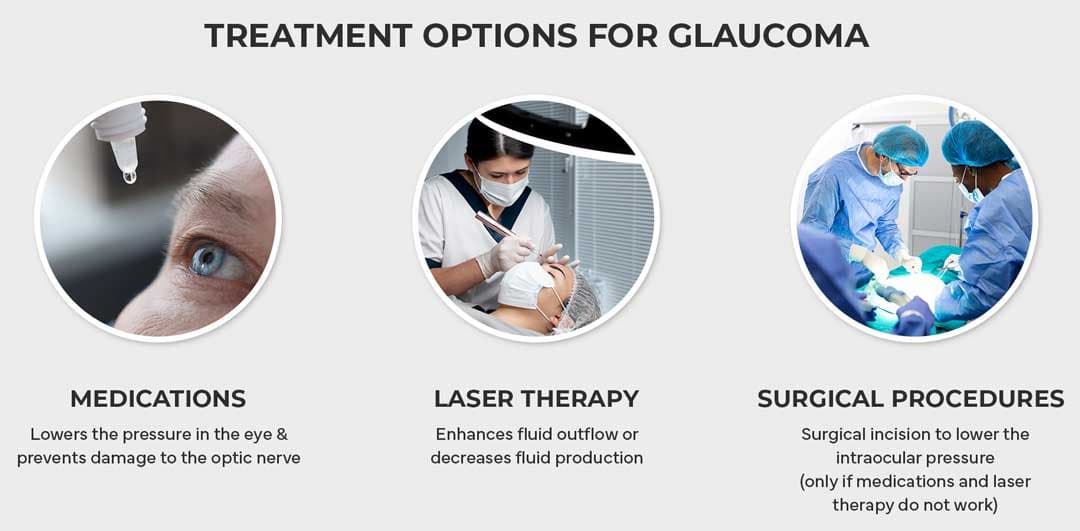
Medicines, Laser and Surgery
Glaucoma treatment aims to lower eye pressure and slow further optic nerve damage.
Glaucoma cannot usually be cured, but it can often be controlled. The goal of treatment is to lower eye pressure enough to prevent or slow further optic nerve damage.
Because glaucoma can worsen without obvious symptoms, treatment may need to change over time to reach a safer target eye pressure. Regular follow-up is essential.
Glaucoma is often treated with eye drops, sometimes combined with oral medicines. These medicines reduce fluid production inside the eye or improve fluid outflow through the drainage angle.
Patients should tell all doctors about glaucoma medications and report side effects such as stinging, redness, blurred vision, headache, pulse changes, breathing changes, drowsiness, appetite changes, or tingling.
Laser treatment can help control eye pressure. Trabeculoplasty may be used for open-angle glaucoma to improve drainage. Iridotomy creates a tiny opening in the iris to improve fluid flow in selected narrow-angle glaucoma cases.
When medicines or laser are not enough, surgery may be recommended to create a new drainage pathway for eye fluid. Surgery is considered when the benefit of lowering eye pressure outweighs the risks and helps protect the optic nerve from further damage.