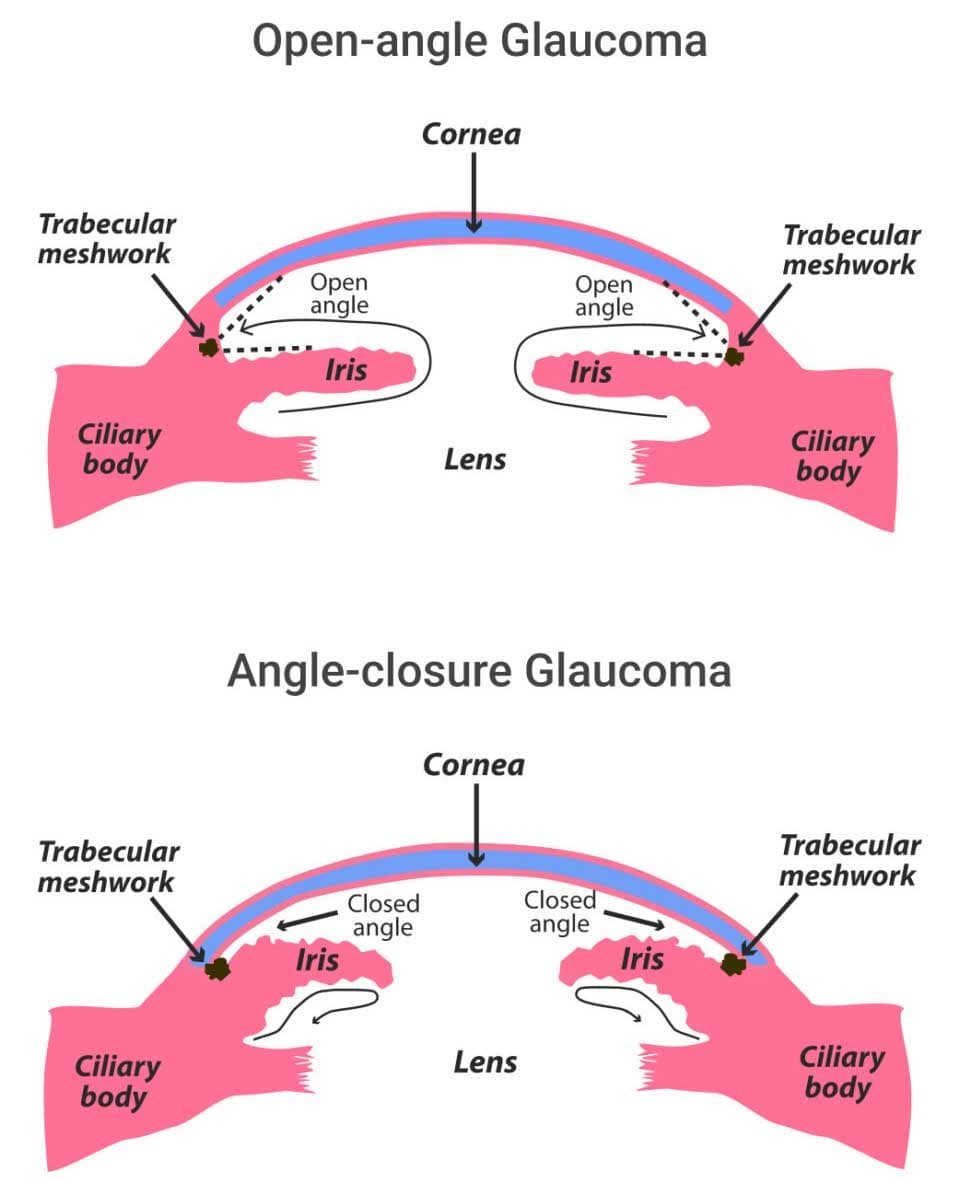
Open-Angle and Angle-Closure Glaucoma

Understanding the glaucoma type helps decide the right monitoring, medicine, laser or surgery plan.
Glaucoma is not a single disease. The type of glaucoma depends on how fluid drains from the eye and how the optic nerve is being affected. Identifying the type is essential for planning treatment.
Open-angle glaucoma is the most common form. The drainage angle of the eye appears open, but fluid does not leave the eye efficiently through the trabecular meshwork. Pressure can rise slowly and damage the optic nerve over time.
This type often progresses quietly, so patients may not notice vision changes until the disease is advanced.
Angle-closure glaucoma happens when the angle between the iris and the cornea is too narrow or becomes blocked. This can cause a sudden rise in eye pressure and may require urgent care.
Acute attacks can cause eye pain, headache, blurred vision, redness, nausea, or halos around lights. Chronic narrow-angle glaucoma may progress more slowly but still needs careful monitoring.
Treatment options differ by type. Some patients need long-term eye drops, some benefit from laser treatment, and some require surgery to create or improve drainage.